
Yokogawa Electric provides advanced automation solutions for process control and safety. Its product range includes CENTUM VP DCS, ProSafe-RS safety systems, and spare parts. Yokogawa technology ensures reliable operation, long-term system support, and optimized performance across industries worldwide.
Yokogawa Electric
-


Yokogawa SCP451-11-S1 | Yokogawa SCP451-11 | CENTUM VP Processor
Technical Overview The SCP451-11-S1 (SCP451-11) is a high-availability processor module designed for the Yokogawa CENTUM VP Field Control Station (FCS). This unit acts as the primary computational engine for executing complex regulatory control and sequence logic. Built for mission-critical industrial environments, the module supports redundant configurations to eliminate single points of failure in the control layer. It facilitates high-speed data processing and ensures deterministic communication between I/O modules and the human-machine interface (HMI). Technical Specifications The following hardware specifications define the operational limits and functional capabilities of the SCP451-11 module: Microprocessor: High-speed RISC Processor Main Memory Capacity: 32 MB Control Loop Capacity: Supports up to 200 blocks (depending on software licensing) Interface Type: Vnet/IP for real-time control network synchronization Current Consumption: 1.5 A at 5V DC Redundancy Support: Dual-redundant configuration capable Mounting: Fits into the AFV10D or AFV10S Field Control Unit slots Communication Speed: 1 Gbps via Vnet/IP interface Operating Temperature: 0 to 50 degrees Celsius Humidity Limits: 5 to 95 percent RH (non-condensing) Operational Capabilities The SCP451-11-S1 is engineered to handle intensive data acquisition and process control tasks. It utilizes a dedicated real-time operating system to ensure that control cycles remain consistent even under high network traffic loads. The module features robust self-diagnostics that monitor CPU temperature, memory parity, and bus integrity in real-time, triggering an immediate failover to the standby partner in redundant setups if a fault is detected. Application Use Cases This processor module is typically deployed in large-scale process industries including: Refinery and petrochemical distillation column control Power plant boiler and steam turbine management Chemical batch processing requiring high-precision timing Upstream oil and gas offshore platform automation FA Does the SCP451-11 support hot-swapping? Yes, when utilized in a dual-redundant configuration, a faulty SCP451-11 can be replaced without shutting down the Field Control Station, ensuring zero process interruption. What is the difference between the S1 and S3 versions? The S1 suffix generally denotes the specific hardware revision and compatibility with certain backplane versions of the CENTUM VP series. Always verify firmware compatibility with your existing system software (R5.01 or higher is typically required for this series).
$200.00 $100.00
-


Yokogawa Yokogawa CP334D S3 | CENTUM VP DCS Processor Module
Product Overview The CP334D functions as a high-speed Field Control Unit (FCU) processor within the Yokogawa CENTUM VP ecosystem. This module is engineered for real-time logic execution and deterministic process control in demanding industrial environments. Utilizing a specialized 32-bit RISC architecture, the CP334D manages complex control loops and extensive data scanning while maintaining the high availability standards required for critical infrastructure. It is designed to interface seamlessly with various I/O subsystems, providing a stable backbone for distributed control system (DCS) architectures. Technical Specifications The following specifications detail the hardware capabilities and environmental tolerances of the CP334D module: Main Processor: 32-bit RISC high-speed processing unit Volatile Memory: 2 MB RAM with ECC (Error Correction Code) Non-Volatile Memory: 2 MB Flash memory for system firmware and configuration storage I/O Capacity: Supports up to 256 local and remote I/O points per station Communication Interfaces: Dual-redundant Vnet/IP or Ethernet ports, RS-232C, and RS-485 serial ports Diagnostic Indicators: LED status lamps for RUN, PAUSE, STOP, and FAULT conditions Power Consumption: Maximum 5.5 VA at 5V DC Installation Environment: Designed for Rack-mount or Cabinet integration Heat Dissipation: Efficient passive cooling design suitable for industrial enclosures Performance Capabilities High-Speed Control Loops: Capable of executing regulatory, arithmetic, and logic control sequences with millisecond precision. System Redundancy: Supports dual-redundant configurations (when paired with a secondary module) to prevent system downtime during hardware transitions. Protocols: Comprehensive support for Modbus RTU/TCP, Foundation Fieldbus, and HART communication via compatible interface modules. Common Applications The CP334D is typically deployed in sectors where process continuity is non-negotiable, including: Petrochemical and refinery sequence control Power plant boiler and turbine management Water treatment and distribution automation Large-scale pharmaceutical batch processing Frequently Asked Questions Is the CP334D backward compatible with older CENTUM systems? The CP334D is primarily optimized for CENTUM VP; however, it can often be integrated into existing CENTUM CS 3000 environments depending on the existing bus architecture and software revision. How does the S3 suffix affect connectivity? The S3 designation typically refers to specific interface or slot compatibility within the Yokogawa rack system, ensuring the module aligns with the internal signal bus of the field control station.
$200.00 $100.00
-


Yokogawa Yokogawa CP133E-64S3 | CP133E-64S3 | Brand New CPU Module
Product Overview The CP133E-64S3 serves as the primary computational engine for Yokogawa CENTUM VP integrated control systems. This field control station (FCS) module is engineered to execute sophisticated control logic, manage extensive real-time databases, and facilitate high-speed data exchange across the Vnet/IP network. By leveraging a dual-core architecture, it provides the deterministic processing required for large-scale industrial automation tasks. Technical Core Specifications Model Number: CP133E-64S3 System Compatibility: CENTUM VP, CENTUM CS 3000 Processor Architecture: Dual-core Intel Xeon Processor Volatile Memory: 4GB DDR3 SDRAM Error Correction: ECC (Error Correction Code) supported Network Interface: Dual-redundant 1Gbps Vnet/IP Ethernet ports Power Configuration: Supports redundant power supply modules Module Dimensions: 51mm x 229mm x 51mm Physical Weight: Approximately 1.11 kg (2.45 lbs) Country of Origin: Japan Mounting Type: Rack-mounted within FCS enclosure Operational Capabilities and Reliability The CP133E-64S3 is specifically hardened for continuous operation in environments where system downtime is not an option. Unlike standard computing hardware, this module utilizes a real-time operating system (RTOS) to ensure that control cycles are executed with millisecond precision. The integration of the Intel Xeon chipset allows for advanced diagnostics and higher calculation density compared to previous generation RISC-based modules. FAQ Does the CP133E-64S3 support online maintenance? Yes, when configured in a redundant pair, this module allows for hot-swapping and firmware updates without interrupting the controlled process. What is the primary difference between the CP133E and earlier CP133 models? The CP133E-64S3 features optimized memory management and enhanced heat dissipation capabilities, making it more suitable for high-density I/O configurations in CENTUM VP R6 and above.
$200.00 $100.00
-


Yokogawa Yokogawa CP333D Processor Module | CENTUM VP Control System
Product Overview The CP333D functions as a high-speed processing core tailored for Yokogawa distributed control systems. It provides the computational backbone necessary for complex control loops and data integration within the CENTUM CS and CENTUM VP architectures. Designed for mission-critical industrial environments, the module emphasizes deterministic performance and hardware reliability. Technical Specifications Model Identification: CP333D Architecture: 32-bit RISC high-speed processor Clock Frequency: 400 MHz System Memory: 256 MB RAM capacity I/O Capacity: Interface support for up to 16 slots Communication Interface: Dual integrated Ethernet ports Input Voltage Requirement: 3.3V DC (Tolerance +/- 9 percent) Power Consumption: 2.5A Maximum Thermal Tolerance: 0 to 50 degrees Celsius (Operating) Storage Limits: -20 to 70 degrees Celsius Relative Humidity: 5 to 95 percent RH (Non-condensing) Physical Mass: 1.0 kg Module Dimensions: 20.3 cm x 5.1 cm x 25.4 cm Functional Comparison and Integration The CP333D represents an evolution over earlier CP333 models by offering enhanced processing overhead for modern CENTUM VP environments. While maintaining backward compatibility with CENTUM CS infrastructure, it utilizes optimized RISC instruction sets to handle increased fieldbus traffic and more intensive control logic compared to legacy 16-bit or lower-clocked 32-bit modules. Common Application Scenarios Continuous process control in petrochemical and refining facilities. Centralized management of distributed I/O nodes in power generation. High-availability control loops requiring redundant processor configurations. Frequently Asked Questions Does this module support redundancy? Yes, the CP333D is designed to function in redundant pairs to ensure system uptime in the event of a hardware fault. Is this compatible with newer CENTUM VP versions? The CP333D is fully compatible with CENTUM VP, provided the appropriate firmware and carrier base are utilized.
$200.00 $100.00
-


Yokogawa Yokogawa CP401-10 | CENTUM CS 3000 Processor Module | DCS
Product Overview The CP401-10 serves as a core computational unit within the Yokogawa CENTUM CS 3000 Distributed Control System (DCS). While often misidentified in basic listings as a simple power unit, this module is a high-performance Field Control Station (FCS) processor designed for real-time process control and high-speed data acquisition. It facilitates seamless communication between I/O modules and the supervisory network, ensuring deterministic control in demanding industrial environments such as chemical processing, refining, and power generation. Technical Specifications The following data represents the electrical and environmental performance standards for the CP401-10 unit: Model Identification: CP401-10 System Compatibility: CENTUM CS 3000 R3 / CENTUM VP Redundancy Support: Dual-redundant configuration capable Power Consumption: 24V DC input (Internal bus powered) Maximum Current Draw: 0.5A at 24V DC Processor Architecture: 32-bit RISC Processor Memory Capacity: 16 MB Main Memory with ECC support Communication Interface: V net / VL net Mounting Requirement: Installed in a Field Control Unit (FCU) rack Heat Dissipation: 12W maximum Cooling System: Natural convection (No fans required) Ambient Operating Temperature: 0 to 50 degrees Celsius Storage Temperature Range: -20 to 70 degrees Celsius Ambient Humidity: 5 to 95 percent RH (Non-condensing) Weight: 0.45 kg Regulatory Compliance: CE Mark, UL, and CSA standards Functional Comparison: CP401-10 vs. CP451-10 CP401-10: Designed for V net communication in standard CS 3000 environments. Ideal for legacy system maintenance and standard process control loops. CP451-10: Enhanced version designed for Vnet/IP high-speed Ethernet-based control networks, offering higher throughput for data-intensive applications.
$200.00 $100.00
-


Yokogawa Yokogawa CP451-10 S2 Processor Module | CENTUM VP DCS Unit
Product Description The CP451-10 S2 serves as a core processing unit within the Yokogawa CENTUM VP Distributed Control System (DCS) architecture. Engineered for high-availability environments, this module facilitates complex logic execution, high-speed data acquisition, and seamless plant-wide communication. A critical design feature of the CP451-10 S2 is its support for dual-redundant configurations. By utilizing synchronous process execution between active and standby units, the system maintains uninterrupted control stability. In the event of a hardware fault on the primary card, the standby processor assumes control without bumping the process or losing volatile data, ensuring maximum uptime for critical infrastructure. Technical Specifications The following technical data outlines the hardware capabilities and physical constraints of the CP451-10 S2 module: Processor: Intel Xeon E5-2680 v4 (14-Core, 2.40 GHz) System Memory: 32 GB DDR4 ECC RAM Primary Storage: 512 GB Solid State Drive (SSD) Operating Environment: Windows Server 2016 Standard Communication Compatibility: Vnet/IP High-Speed Control Network Redundancy Support: Synchronous hardware-level mirroring Mounting Dimensions: 482.6 mm x 88.9 mm x 44.5 mm Net Weight: 8.0 kg Input Voltage: Dual redundant power supply support (standard DCS backplane) Operating Temperature: 0 to 50 degrees Celsius Humidity Range: 5 to 90 percent RH (non-condensing) Primary Application Fields The CP451-10 S2 is deployed in sectors requiring zero-fail process logic, specifically: Petrochemical and hydrocarbon processing (Oil and Gas) Large-scale thermal and nuclear power generation Complex pharmaceutical manufacturing lines Advanced water and wastewater treatment facilities
$200.00 $100.00
-


Yokogawa Yokogawa SCP461-11 | ProSafe-RS Safety SIS Processor Module
Product Description The SCP461-11 serves as the high-performance logic processing engine for Yokogawa ProSafe-RS safety instrumented systems. Specifically engineered for integration within the SSC60S (Single) and SSC60D (Duplex) safety control units, this module provides the computational reliability required for SIL3 safety loops. By utilizing a dedicated 32-bit RISC architecture, the SCP461-11 ensures rapid execution of safety logic while maintaining rigorous diagnostic coverage. Technical Specifications CPU Architecture: 32-bit RISC high-speed processor Clock Frequency: 40 MHz Flash Memory: 2 MB dedicated for system firmware and application logic storage NVRAM: 128 KB non-volatile memory for retaining operation data and sequence-of-events Communication Interface: Dual isolated RS-485 ports supporting high-speed fieldbus and peer-to-peer connectivity Expansion Capability: Dual-slot interface for auxiliary I/O integration or specialized communication sub-modules Redundancy Support: Fully compatible with dual-redundant configurations in SSC60D units Safety Integrity Level: Suitable for use in SIL3 applications according to IEC 61508 Power Consumption: 5V DC at 0.5A (Typical) Operating Temperature: 0 to 50 degrees Celsius Weight: Approx. 0.35 kg Core Applications This processor is widely deployed in emergency shutdown systems (ESD), fire and gas systems (F&G), and burner management systems (BMS). Its robust design allows for stable operation in harsh petrochemical, power generation, and upstream oil and gas environments where system uptime is critical to personnel and environmental safety. FAQ How does the SCP461-11 handle power loss? The module utilizes 128 KB of NVRAM to ensure that critical operational variables and diagnostic logs are preserved immediately upon loss of system power, preventing data corruption. Can I use this module in a non-redundant setup? Yes, the SCP461-11 is designed to function as a standalone controller in SSC60S units or as part of a synchronized pair in SSC60D redundant units.
$200.00 $100.00
-


Yokogawa Yokogawa CP345-S1 | CP345S1 | CENTUM CS 3000 Analog Input
Product Overview The CP345-S1 (CP345S1) is a precision-engineered analog input module specifically developed for the Yokogawa CENTUM CS 3000 distributed control system (DCS). This hardware interface allows for the seamless integration of field signals into the control network, ensuring high-integrity data acquisition for critical industrial processes. It is optimized for environments requiring dense channel counts without compromising on signal isolation or conversion speed. Technical Specifications The following data outlines the electrical and environmental parameters for the CP345-S1 (CP345S1). Please note that while some documentation suggests a shipping weight of 2000g, the module net weight is approximately 0.7kg. Channel Density: 16 isolated channels Input Signal Types: Voltage (plus/minus 10V), Current (plus/minus 20mA), Low Voltage (plus/minus 50mV) A/D Conversion Resolution: 16-bit Measurement Accuracy: plus/minus 0.05 percent of full span Common Mode Rejection Ratio (CMRR): greater than 100dB Normal Mode Rejection Ratio (NMRR): greater than 80dB Temperature Drift Coefficient: plus/minus 0.005 percent per degree Celsius Operating Temperature Range: 0 to 55 degrees Celsius Allowable Ambient Humidity: 10 to 90 percent RH (non-condensing) Physical Dimensions: 120mm x 90mm x 220mm Power Consumption: Approximately 450mA at 5V DC Application Scenarios The CP345-S1 (CP345S1) is typically deployed in heavy industries where reliable sensor feedback is mandatory. Common applications include: Refinery process monitoring (flow and pressure loops) Power plant thermal data acquisition Chemical reactor temperature control via 4-20mA or mV transmitters Water treatment facility remote I/O stations Frequently Asked Questions How does the CP345-S1 (CP345S1) handle signal noise? The module utilizes a high CMRR of over 100dB and a 16-bit resolution architecture to filter out electromagnetic interference and maintain signal purity in noisy industrial environments. Is the CP345-S1 (CP345S1) hot-swappable? When used within the standard CENTUM CS 3000 I/O nest configurations, these modules support online replacement, though specific system bus rules should be followed to maintain process continuity.
$200.00 $100.00
-


Yokogawa Yokogawa CP701-S1 Field Control Station CPU Module
Technical Overview The CP701 (specifically the CP701-S1 variant) functions as the primary computational engine for Yokogawa Field Control Stations (FCS). This module is designed to execute complex control algorithms and manage real-time data processing within the CENTUM series architecture. It provides a stable environment for regulatory control and sequence logic, ensuring high reliability for critical process industries. The hardware utilizes a dual-clock architecture to balance internal computational speed with external communication synchronization. With 8MB of onboard memory, it supports substantial configuration data and function block execution for medium-to-large scale industrial applications. Hardware Specifications The following data represents the core technical parameters for the CP701-S1 processor unit: Manufacturer: Yokogawa Model Designation: CP701 Order Part Number: CP701-S1 Memory Capacity: 8 MB (ECC supported for data integrity) Internal Processor Frequency: 75 MHz External Bus Clock: 25 MHz Power Consumption: Approximately 5W (dependent on configuration) Weight: 0.3 kg Mounting Type: Rack-mounted within the FCS nest System Architecture: Compatible with CENTUM CS 1000 and CS 3000 systems Functional Comparison Unlike higher-tier processor modules that may offer 16MB or 32MB of RAM, the CP701-S1 is optimized for standard field control tasks where memory footprint is managed efficiently. It provides a more cost-effective solution for stations that do not require extensive batch recipe storage or massive historical buffering at the controller level. Frequently Asked Questions Question: Is the CP701 compatible with newer CENTUM VP software? A: Compatibility depends on the specific hardware revision and the bus interface. Generally, these modules are maintained as legacy replacements for CS 3000 systems, but they can coexist in integrated environments via specialized bus converters. Question: What causes a 'SBY' (Standby) light to blink on this module? A: This usually indicates a synchronization state in a redundant setup or a configuration mismatch between the primary and secondary CP701-S1 module
$200.00 $100.00
-


Yokogawa Yokogawa CP451-11 Centum VP DCS Processor Module Unit
Product Description The CP451-11 serves as a core processing engine for the Yokogawa Centum VP Distributed Control System (DCS). While this specific revision has reached its end-of-life phase and is succeeded by the CP451-51, it remains a critical component for maintaining legacy infrastructure and ensuring system continuity in established industrial environments. This module is engineered for high-availability control logic execution, managing complex regulatory and sequence control tasks with precision. It features a robust dual-core architecture that segregates system tasks from control execution to maintain stability even under high load conditions. Technical Specifications Brand: Yokogawa Model: CP451-11 System Compatibility: Centum VP (Vnet/IP) Architecture: Dual-core processor for redundant task management Memory: High-capacity ECC RAM for data integrity and large-scale control logic storage Interface: Vnet/IP communication port support Width: 32 mm Height: 145 mm Depth: 200 mm Weight: 0.74 kg Input Voltage: 5V DC (supplied via backplane) Current Consumption: 2.0 A maximum Operating Temperature: 0 to 50 degrees Celsius Humidity Range: 10 to 90 percent RH (non-condensing) Legacy Support and Migration As the CP451-11 is no longer in active production, it is primarily utilized as a direct replacement part for existing field stations. For new installations or system upgrades, the CP451-51 is the recommended functional equivalent, offering improved processing efficiency while maintaining backward compatibility with existing Vnet/IP bus structures and I/O module nests. Common Applications Oil and Gas refinery process control Chemical plant sequence management Power generation facility monitoring Replacement of aging Centum VP field control station components Product Comparison CP451-11: Original dual-core processor module; standard for earlier Centum VP releases. CP451-51: Current production model; enhanced security features and optimized heat dissipation; fully interchangeable with the CP451-11
$200.00 $100.00
-


Yokogawa Yokogawa CP451-10 Processor Module | Discontinued Replacement
Product Description OverviewThe CP451-10 Processor Module from Yokogawa is a high-performance control processor designed for advanced industrial process automation systems. This module has been officially discontinued and replaced by the CP451-50 Processor Module, offering improved functionality and enhanced reliability. Technical Specifications Model / Part Number: CP451-10 Manufacturer: Yokogawa Product Type: Processor Module Weight: 0.45 Kg Power Supply: 24 V DC nominal Operating Temperature: 0 to 55 degrees Celsius Storage Temperature: -20 to 70 degrees Celsius Communication Interfaces: Redundant bus support, high-speed data transfer compatible with Yokogawa DCS systems Mounting: Rack-mountable, compatible with Yokogawa CENTUM series frames Diagnostic Functions: Built-in self-check routines, status LEDs for operational monitoring Replacement Model: CP451-50 for enhanced processing speed and extended system compatibility ApplicationsThe CP451-10 Processor Module is suitable for complex process control applications such as chemical plants, power generation, water treatment, and other critical infrastructure where real-time control and high reliability are required. FAQQ: Can CP451-10 be replaced directly with CP451-50?A: Yes, the CP451-50 is the direct replacement and offers improved performance while maintaining backward compatibility. Q: What is the maximum supported system size?A: Supports full-scale CENTUM DCS configurations with redundant control loops. Q: Is on-site installation support required?A: Installation should be performed by certified personnel following Yokogawa guidelines.
$200.00 $100.00
-


Yokogawa Yokogawa AIP578 | Analog Input Module | 8 Channels
Product Description: The Yokogawa AIP578 is a high-performance analog input module designed for use within the Yokogawa CENTUM VP and CENTUM CS 3000 Distributed Control Systems (DCS). This module is part of the Field Input/Output (FIO) family and is specifically engineered for isolated current input applications. The AIP578 is ideal for environments where field devices operate with different ground potentials or when high signal integrity is crucial to avoid ground loops. The module offers channel-to-channel isolation, distinguishing it from conventional modules that use a common ground. This module is built for accuracy and reliability, providing 8 input channels with a range of 4 to 20 mA DC. Its 250 Ω internal shunt ensures precise current measurements, while ±0.1% accuracy guarantees high performance across applications. The AIP578 is highly resistant to electrical interference with a 500 V AC isolation voltage between channels and a 1500 V AC isolation between the system and the field devices. The data refresh cycle of 10 ms ensures real-time processing, making it suitable for fast and demanding control systems. Additionally, the module's maximum current consumption is 450 mA when powered from a 5 V DC backplane. Key Features: Model Number: AIP578 Module Type: Analog Input Module (Current) Number of Channels: 8 Channels (Channel-to-Channel Isolation) Input Signal Range: 4 to 20 mA DC Input Impedance: 250 Ω (Internal shunt) Accuracy: ±0.1% of full span Isolation Voltage: 500 V AC (Channel-to-Channel), 1500 V AC (System-to-Field) Data Refresh Cycle: 10 ms Current Consumption: Max. 450 mA (5 V DC from backplane) Mounting: Installs in ANB10, ANB11, or ANT10 FIO units
$200.00 $100.00
-


Yokogawa Yokogawa AIP171 | Analog Input Module (Current) | 16 Channels
Product Description: The Yokogawa AIP171 is an advanced analog input module designed to seamlessly integrate with the Yokogawa CENTUM VP and CENTUM CS 3000 Distributed Control Systems (DCS). This high-density module is engineered to handle current input signals, typically from 2-wire or 4-wire transmitters, ensuring precise data conversion for use in demanding industrial applications. As a part of the Field Input/Output (FIO) system, it transforms 4 to 20 mA field signals into reliable digital data for process control, offering high accuracy and system reliability. This module supports up to 16 input channels, each non-isolated from the others, and provides a 250 Ω internal shunt resistor to accurately measure current. With system isolation of 1500 V AC, it protects the system from electrical interference, ensuring stable operation in complex control environments. The AIP171 module operates with a data refresh cycle of just 10 ms per channel and has a max current consumption of 450 mA (at 5V DC from the backplane), making it a suitable solution for high-speed, high-reliability requirements. Key Features: Model Number: AIP171 Module Type: Analog Input Module (Current Input) Number of Channels: 16 Channels (Non-isolated between channels) Input Signal Range: 4 to 20 mA DC Input Impedance: 250 Ω (Internal shunt resistor) Accuracy: ±0.1% of full span System Isolation: 1500 V AC (Between field and system bus) Data Refresh Cycle: 10 ms Current Consumption: Max. 450 mA (5 V DC from backplane) Mounting: Compatible with ANB10, ANB11, or ANT10 FIO units
$200.00 $100.00
-


Yokogawa Yokogawa AIP552-S1 | 16-Channel Analog Input Module (Current)
Product Description: The Yokogawa AIP552-S1 is a high-performance analog input module designed for seamless integration within the Yokogawa CENTUM VP and CENTUM CS 3000 Distributed Control Systems (DCS). This module is tailored for current signal acquisition and functions within the Field Input/Output (FIO) system. It receives 4 to 20 mA DC signals from field transmitters and converts them into 1 to 5 V DC internal system signals, ensuring robust communication between field instruments and control stations. The AIP552-S1 supports 16 input channels, making it an ideal choice for high-density applications that require simultaneous processing of multiple current signals. It features an accuracy of ±0.1% of full span, ensuring precise signal conversion and reliable data transmission. The module offers 1500 V AC isolation between the field and system, protecting sensitive control electronics from electrical interference and maintaining data integrity. Key Features: 16 Input Channels: Ideal for processing multiple current signals at the same time, enhancing system flexibility. Input Signal Range: Handles 4 to 20 mA DC current input signals commonly used in industrial applications. Internal Output Signal: Converts current signals to 1 to 5 V DC for easy integration into the system's control logic. Input Resistance: Features a 250 Ω internal shunt for effective current measurement. Accuracy: Provides ±0.1% full span accuracy, ensuring reliable data conversion for critical control processes. System Isolation: 1500 V AC isolation between the field-side and system-side, safeguarding the control system from potential electrical noise or interference. Data Refresh Cycle: 10 ms, facilitating real-time data processing with minimal latency. Power Consumption: Consumes a maximum of 450 mA at 5 V DC from the backplane, ensuring energy efficiency. Mounting: Designed for easy installation in Yokogawa I/O Base Units, such as AMN or ANB series. This module is ideal for industries that require precise current-based signal acquisition, such as process control, temperature and pressure monitoring, and flow measurement. Applications: Current Signal Acquisition: Designed to convert 4 to 20 mA DC signals from field instruments into usable voltage data for the control system. Process Control Systems: Essential for industries like chemical, oil and gas, and water treatment, where real-time data conversion and monitoring are critical. FAQ: Q: How many channels does the AIP552-S1 have?A: The AIP552-S1 module features 16 input channels, making it ideal for applications requiring multiple current signal inputs. Q: What is the input signal range of this module?A: The AIP552-S1 supports an input signal range of 4 to 20 mA DC, a common range for many field transmitters. Q: What kind of isolation does the AIP552-S1 provide?A: The module offers 1500 V AC galvanic isolation between the field-side and system-side, ensuring protection from electrical noise and enhancing system reliability.
$200.00 $100.00
-


Yokogawa Yokogawa AIP503-S1 | 16-Channel Analog Input Module (Current)
Product Description: The Yokogawa AIP503-S1 is a high-performance analog input module designed for integration within the Yokogawa CENTUM VP and CENTUM CS 3000 Distributed Control Systems (DCS). This module is specifically engineered to handle current signal acquisition in industrial environments. As part of the Field Input/Output (FIO) system, it receives 4 to 20 mA DC signals from field transmitters and converts them into 1 to 5 V DC internal system signals, facilitating smooth communication between field instrumentation and the control logic of the DCS. The AIP503-S1 features 16 input channels, allowing for the concurrent processing of multiple current signals. It ensures high accuracy with a measurement precision of ±0.1% of full span, providing reliable signal conversion for mission-critical applications. Additionally, it offers 1500 V AC isolation between the field side and the system side, protecting the internal electronics from electrical interference or damage. Key Features: 16 Input Channels: Supports the simultaneous acquisition of multiple current signals, ideal for applications with numerous field transmitters. Input Signal Range: Handles 4 to 20 mA DC current signals, commonly used in industrial process control systems. Internal Output Signal: Converts received current signals into 1 to 5 V DC for seamless integration with the control system. Input Resistance: Features 250 Ω internal shunt, optimizing the signal conditioning process. Accuracy: ±0.1% of full span, providing precise and consistent signal conversion for reliable system performance. System Isolation: 1500 V AC galvanic isolation between the field and system, protecting sensitive electronics from electrical interference. Data Refresh Cycle: 10 ms, enabling real-time signal processing with minimal latency. Power Consumption: Maximum 450 mA (at 5 V DC from the backplane), ensuring efficient operation. Mounting: Easy installation in Yokogawa I/O Base Units, such as AMN or ANB series. This module is highly suitable for industrial applications that require the integration of current-based signals into the control system, such as temperature, pressure, and flow measurements, among others. Applications: Current Signal Acquisition: Ideal for applications where field devices generate 4 to 20 mA DC current signals. Process Control Systems: Essential for systems where current-based signals need to be converted into voltage for further processing and control. FAQ: Q: How many channels does the AIP503-S1 support?A: The AIP503-S1 provides 16 input channels, making it suitable for high-density signal processing applications. Q: What is the input signal range for this module?A: The AIP503-S1 accepts 4 to 20 mA DC input signals, typically used by field transmitters. Q: What type of isolation does the module provide?A: The AIP503-S1 offers 1500 V AC isolation between the field and system, ensuring protection against electrical interference.
$200.00 $100.00
-


Yokogawa Yokogawa AIP121-S2 | 16-Channel Analog Input Module
Product Description: The Yokogawa AIP434-S1 is a high-performance analog input module designed for the Yokogawa CENTUM VP and CENTUM CS 3000 Distributed Control Systems (DCS). Part of the FIO (Field Input/Output) series, this module is specifically engineered for high-density voltage signal acquisition. The AIP434-S1 functions as a 1 to 5 V DC voltage input module, converting field signals into digital data for processing by the control stations. It also provides robust galvanic isolation to protect the system's core electronics from electrical interference originating from field-side sources, ensuring reliable data processing in demanding industrial environments. With 16 input channels, the module is ideal for applications requiring a large number of signals. It offers high accuracy of ±0.1% of full span, ensuring precise measurements for critical process control applications. The module is designed with 1 MΩ resistance or higher when powered on, and 100 kΩ or higher when powered off, maintaining signal integrity across a wide range of operating conditions. Key Features: 16 Input Channels: Supports efficient acquisition of multiple voltage signals, ideal for high-density applications. Input Signal Range: Capable of processing 1 to 5 V DC voltage signals for a variety of field instruments. Input Resistance: 1 MΩ or higher when powered on, and 100 kΩ or higher when powered off, for optimal signal conditioning. Accuracy: ±0.1% of full span, ensuring precise and reliable data conversion. System Isolation: 1500 V AC galvanic isolation between field devices and the system, protecting against electrical interference. Data Refresh Cycle: 10 ms, allowing real-time signal processing. Power Consumption: Maximum 450 mA (at 5 V DC from backplane) for efficient energy use. Mounting: Easily installs into FIO Node Units such as ANB10, ANB11, or ANT10. This module is ideal for applications requiring precise voltage signal acquisition with high accuracy and excellent isolation, such as in temperature monitoring, pressure transducers, and other industrial control systems. Applications: Voltage Signal Measurement: Ideal for voltage-based field devices such as pressure or temperature sensors. Industrial Process Control: Perfect for process control tasks where high-speed and high-accuracy data acquisition is essential. FAQ: Q: How many input channels does the AIP434-S1 support?A: The AIP434-S1 provides 16 input channels, allowing for the simultaneous acquisition of multiple voltage signals. Q: What is the input signal range for the AIP434-S1?A: The input signal range is 1 to 5 V DC, suitable for a wide range of industrial field instruments. Q: Does the AIP434-S1 offer isolation for system protection?A: Yes, the AIP434-S1 provides 1500 V AC galvanic isolation between the field devices and the control system to protect the core electronics.
$200.00 $100.00
-


Yokogawa Yokogawa AIP423 | 16-Channel Analog Input Module | CENTUM VP/CS 3000
Product Description: The Yokogawa AIP423 is a high-performance analog input module specifically designed for use in Yokogawa CENTUM VP and CENTUM CS 3000 Distributed Control Systems (DCS). As part of the FIO (Field Input/Output) series, this module is optimized for high-density signal acquisition, offering reliable voltage input functionality in demanding industrial environments. The AIP423 plays a key role in converting field signals into digital data that can be processed by the control systems while ensuring galvanic isolation to protect the core system electronics from electrical interference coming from field-side sources. This module supports 16 input channels, each capable of processing voltage signals in the range of 1 to 5 V DC, ideal for various industrial control applications such as temperature and pressure monitoring. The high accuracy of ±0.1% of full span guarantees precise data conversion, making it suitable for critical process control. Key Features: 16 Input Channels for efficient signal processing, making it ideal for high-density signal applications. Input Signal Range: 1 to 5 V DC, supporting standard industrial voltage signal measurements. Input Resistance: 1 MΩ or higher (during power on) for optimal signal conditioning. Accuracy: ±0.1% of full span, ensuring precise and reliable measurements. Isolation: 1500 V AC isolation between field devices and system, protecting sensitive control electronics. Data Refresh Cycle: 10 ms, enabling fast and continuous signal updates for real-time control. Power Consumption: Max. 450 mA (5 V DC from backplane) for energy-efficient operation. Mounting: Easily installs in FIO Node Units (e.g., ANB10, ANB11, ANT10), compatible with existing CENTUM systems. This module is particularly useful in applications where accurate voltage measurement and signal isolation are required. It ensures optimal integration and protection within the broader Yokogawa DCS architecture. Applications: Voltage Signal Processing: Perfect for applications that need precise voltage measurements, such as pressure transducers and temperature sensors. Industrial Control: Ideal for industrial process control tasks requiring reliable and fast data acquisition. FAQ: Q: How many input channels does the AIP423 support?A: The AIP423 supports 16 input channels, each capable of processing 1-5 V DC voltage signals. Q: What is the input resistance of the AIP423?A: The input resistance is 1 MΩ or higher during power-on conditions, ensuring minimal signal distortion. Q: What kind of isolation does the AIP423 provide?A: The AIP423 offers 1500 V AC isolation between field devices and the control system, protecting sensitive electronics from electrical interference.
$200.00 $100.00
-


Yokogawa Yokogawa AIP121-S2 | 16-Channel Analog Input Module | CENTUM VP/CS 3000
Shopify Product Title: Yokogawa AIP121-S2 | Analog Input Module | CENTUM VP/CS 3000 | 16 Channels Product Description: The Yokogawa AIP121-S2 is a high-performance analog input module designed to work seamlessly within the Yokogawa CENTUM VP and CENTUM CS 3000 Distributed Control Systems (DCS). This module plays a crucial role in the system’s FIO (Field Input/Output) architecture, specifically engineered for industrial environments where reliable and precise signal acquisition is essential. It is optimized for interfacing with 2-wire or 4-wire transmitters, ensuring accurate measurement and isolation of field data. With 16 isolated input channels, the AIP121-S2 can handle a range of input signals, including the widely-used 4-20 mA DC current loop. The module offers high-density signal conditioning, ensuring that field signals are converted and isolated efficiently before being sent to the system’s control units. Key Features: 16 Isolated Analog Input Channels for reliable data acquisition in challenging industrial environments 4 to 20 mA DC input signal compatibility, supporting standard current loop signals Impedance: 250 Ω (Typical) for optimal signal conditioning Accuracy: ±0.1% of full span, ensuring precise measurement of field signals High Isolation: 1500 V AC isolation between field devices and system, protecting your system from electrical disturbances Update Time: 10 ms per 16 channels, enabling fast data processing and response Low Power Consumption: Max. 450 mA (5 V DC from backplane) for energy-efficient operation Mounting Compatibility: Designed for installation in ANB10, ANB11, or ANT10 units for easy integration into existing setups This module is ideal for applications where high-accuracy and reliable signal acquisition are paramount, such as temperature monitoring, pressure measurements, or flow control in industrial automation systems. Applications: Temperature, Pressure, and Flow Measurement: Suitable for use in industrial control systems where continuous, accurate data is crucial. Process Control: Essential in maintaining optimal conditions for sensitive manufacturing processes. FAQ: Q: Can the AIP121-S2 handle both 2-wire and 4-wire transmitters?A: Yes, the AIP121-S2 is designed to interface with both 2-wire and 4-wire transmitters for maximum flexibility in signal acquisition. Q: What is the maximum isolation voltage?A: The AIP121-S2 offers 1500 V AC isolation between field devices and the system, ensuring protection against electrical surges and noise. Q: How many channels does the module support?A: The AIP121-S2 supports up to 16 isolated analog input channels, making it ideal for applications with multiple sensors.
$200.00 $100.00
-


Yokogawa Yokogawa AIP602 Vnet Coupler Unit for CENTUM VP & CS 3000
Product Overview: The Yokogawa AIP602 is a high-performance Vnet Coupler Unit, also known as a Vnet/IP to Vnet Gateway, used within the CENTUM VP and CENTUM CS 3000 systems. Unlike PC cards like the AIP827, the AIP602 is a standalone, rack-mounted hardware device designed to facilitate communication between different control network segments or domains. It is a crucial component for ensuring high-reliability communication over large distances or complex network topologies. Key Features: Dual Redundancy: Fully supports Yokogawa’s redundant network architecture (Bus 1 and Bus 2), ensuring reliable and fault-tolerant communication between network segments. Galvanic Isolation: Provides electrical isolation between different segments of the network to protect against ground loops and electromagnetic interference (EMI), ensuring clean and stable signal transmission. Signal Conditioning: Regenerates and conditions the digital signal, maintaining clean waveforms and preventing data corruption over long-distance cable runs. Hot-Swappable: Designed for industrial availability, this feature allows for maintenance or replacement without interrupting the operation of the entire control network. Flexible Connectivity: Supports both Vnet (coaxial) and Vnet/IP (RJ45/fiber), making it adaptable for various configurations and network needs. Technical Specifications: Parameter Specification Details Model Number AIP602 Function Vnet/IP or Vnet Coupler / Gateway Mounting 19-inch Rack-mount or Baseplate-mount Network Type Vnet (Coaxial) / Vnet/IP (RJ45/Fiber) Redundancy Dual-redundant communication Power Supply 100-120 VAC or 220-240 VAC (Model dependent) Operating Temp 0°C to +50°C Common Use Cases: Domain Coupling: Used to connect a Domain 1 control network to a Domain 2 network, ensuring logical separation of traffic while allowing communication between different control systems. Distance Extension: Acts as a signal repeater, extending the physical distance between Field Control Stations (FCS) when it exceeds the typical cable limitations. Media Conversion: Facilitates media conversion from coaxial Vnet to fiber-optic or Ethernet-based Vnet/IP in certain configurations, allowing for flexible network setups. Troubleshooting & Maintenance: Status Indicators: STATUS (Green): Normal operation. ERROR (Red): Indicates an internal hardware failure or configuration mismatch. RCV/SND (Orange): Indicates data traffic activity. Cable Integrity: Since the AIP602 often serves as the mid-point in a network, failure of this unit can disrupt communication for an entire segment of the plant. Ensure BNC connectors for Vnet are properly connected and terminated with 50Ω resistors, especially if the unit is at the end of a line. Environmental Check: The unit may be placed in satellite rack rooms, making it susceptible to dust buildup. Regularly check that cooling vents are clear to prevent overheating and thermal shutdowns. Hardware Notes: If you are migrating a legacy CENTUM CS system to CENTUM VP, the AIP602 often serves as the critical bridge that facilitates communication between new VP stations and older CS control stations.
$200.00 $100.00
-


Yokogawa Yokogawa AIP827-1 Vnet/IP Interface Card for CENTUM VP
Product Overview: The Yokogawa AIP827-1 is a high-performance Vnet/IP Interface Card used in Human Interface Stations (HIS) and Engineering Stations (ENG) within Yokogawa’s CENTUM VP and CENTUM CS 3000 Distributed Control System (DCS) environments. Unlike traditional I/O modules, the AIP827-1 is a PCI Express (PCIe) card that installs directly into a PC or server, enabling communication with Yokogawa’s proprietary Vnet/IP network for real-time control applications. Key Features: Dual-Redundant Ports: Equipped with two RJ45 Ethernet ports to connect to "Bus 1" and "Bus 2" of the redundant Vnet/IP network, ensuring high availability and reliability for mission-critical applications. PCI Express Interface: The card uses a PCIe x1 slot, making it compatible with modern industrial PCs and workstations (e.g., Dell or HP), offering fast data transfer capabilities. High-Speed Communication: With 1 Gbps network speed, the AIP827-1 guarantees that process data, alarms, and control commands are transmitted with the determinism required for industrial safety. Time Synchronization: Supports high-precision time synchronization across the DCS network, ensuring accurate event logs to the millisecond, essential for system diagnostics and troubleshooting. Offloading Processor: The onboard processor handles network protocol stacks, freeing the PC’s main CPU from managing network traffic and ensuring smoother operations during high-traffic periods. Technical Specifications: Parameter Specification Details Model Number AIP827-1 Interface Type PCI Express (PCIe) x1 Network Speed 1 Gbps (1000Base-T) Connector Type 2 x RJ45 (Shielded) Network Protocol Vnet/IP (Yokogawa Proprietary) Max Stations Up to 64 stations per domain Power Consumption Max 5.0 W Supported OS Windows 10 / Server 2016/2019/2022 (Revision-dependent) Operating Temperature 0°C to 60°C Application & Functionality: The AIP827-1 is essential in a Vnet/IP setup, allowing the Human Interface Station (HIS) or Engineering Station (ENG) to interface with Field Control Stations (FCS) and other nodes. This ensures timely and reliable data transmission for critical process control, alarm monitoring, and control operations.
$200.00 $100.00
-


Yokogawa Yokogawa AIP512-S2 Communication Module V-Net ESB RIO
Product Description The Yokogawa AIP512-S2 communication interface module is engineered for seamless data exchange within CENTUM VP and CENTUM CS 3000 distributed control systems. It operates as a multifunctional interface, supporting V-Net communication, ESB backplane connectivity, and Remote I/O (RIO) integration. Designed for high-reliability industrial environments, this module enables stable, bidirectional communication between controllers, PLCs, and distributed I/O systems. Its flexible configuration allows it to function across multiple network layers, making it suitable for both system expansion and legacy integration. Key Technical Features Multi-role communication module supporting V-Net, ESB, and RIO architectures Deterministic data transmission for control-critical applications High-speed ESB backplane communication for I/O data exchange Industrial-grade construction for long-term stability Integrated LED indicators for real-time diagnostics Secure terminal connections for vibration-resistant installations Technical Specifications Parameter Specification Manufacturer Yokogawa Electric Corporation Model AIP512-S2 Module Type Communication Interface / Bus Coupler Supported Systems CENTUM VP, CENTUM CS 3000 Communication Protocols V-Net, ESB (Extended Serial Backplane), RIO Bus Communication Function Controller ↔ PLC ↔ Remote I/O data exchange V-Net Speed 125 kbps ESB Backplane Speed Up to 128 Mbps RIO Communication Twisted-pair bus Max ESB Distance 10 m Power Supply 24 V DC (via system backplane) Power Consumption Approx. 10–15 W Current Consumption Approx. 0.4–0.6 A Mounting Options Rack or DIN rail (variant dependent) Status Indicators LED diagnostics Configuration Hardware switch settings Terminal Type Screw terminals (M4, ESB variant) Mechanical Characteristics Due to multiple hardware configurations within the AIP512 series, dimensions vary: Compact V-Net version: approx. 152 × 76 × 254 mm, lightweight design RIO interface version: approx. 225 × 140 × 92 mm, heavier industrial housing This variation reflects different installation roles within the control system. Environmental Conditions Operating Temperature: Standard: 0°C to +55°C Extended (RIO variant): –20°C to +55°C Relative Humidity: 5% to 95% (non-condensing) Compliance: CE, industrial EMC and safety standards Applications Distributed control systems (DCS) integration PLC and controller network communication Remote I/O system expansion Process industries such as oil & gas, power generation, and chemical plants FAQ Q: What roles can the AIP512-S2 module perform?A: It can function as a V-Net coupler, ESB bus interface, or RIO communication module depending on system configuration. Q: Is the module suitable for long-distance communication?A: It is optimized for high-speed, short-distance ESB communication (up to 10 m) and reliable field-level RIO connections. Q: How is the module powered?A: It receives 24 V DC power directly from the system backplane, eliminating the need for external supply wiring.
$200.00 $100.00
-


Yokogawa Yokogawa AIP532-S1 ESB Bus Coupler Module for CENTUM
Product Description The Yokogawa AIP532-S1 is a dedicated ESB (Extended Serial Backplane) bus coupler designed for use within CENTUM VP and CENTUM CS 3000 distributed control systems. It acts as the communication link between the Field Control Unit (FCU) and ESB-connected node units, ensuring consistent and time-critical data exchange across the control network. This module is optimized for deterministic communication, allowing high-speed transfer of I/O data with minimal latency. It is commonly deployed in applications where system reliability and response time are critical. The design supports redundant configurations and incorporates strong resistance to electromagnetic interference, making it suitable for harsh industrial environments. Functional Overview ESB bus interface between FCU and remote node units Deterministic communication for real-time control systems High-throughput data exchange with low latency Designed for redundant system architectures Enhanced EMI immunity for stable operation Compact mechanical profile for control cabinet integration Technical Specifications Parameter Specification Manufacturer Yokogawa Electric Corporation Model AIP532-S1 Module Type ESB Bus Coupler Compatible Systems CENTUM VP, CENTUM CS 3000 Interface ESB (Extended Serial Backplane) Function FCU to ESB node communication Data Transfer Rate Up to 128 Mbps (bi-directional) Maximum Cable Length 10 m Communication Type Proprietary ESB protocol (non-Ethernet based) Redundancy Support Yes (system dependent) Electrical Characteristics Parameter Value Operating Voltage 24 V DC (via system backplane) Power Consumption Typically < 1 W Current Consumption Low current design (dependent on configuration) Environmental Conditions Parameter Value Operating Temperature –20°C to +60°C (typical industrial rating) Storage Temperature –20°C to +70°C Relative Humidity 5% to 95% (non-condensing) Protection Level Designed for cabinet installation (IP rating depends on enclosure) Compliance and Standards CE marking UL and CSA certifications IEC compliance for industrial control equipment RoHS compliant Applications Distributed control system (DCS) architectures High-speed I/O communication networks Oil and gas processing facilities Power generation plants Large-scale continuous process industries FAQ Q: Does the AIP532-S1 support standard industrial Ethernet protocols?A: No, it uses Yokogawa’s proprietary ESB communication protocol for deterministic performance. Q: What is the primary role of this module in a CENTUM system?A: It links the Field Control Unit to ESB node units, enabling fast and reliable I/O data exchange. Q: Can this module be used in redundant configurations?A: Yes, redundancy is supported when implemented within compatible system architectures.
$200.00 $100.00
-
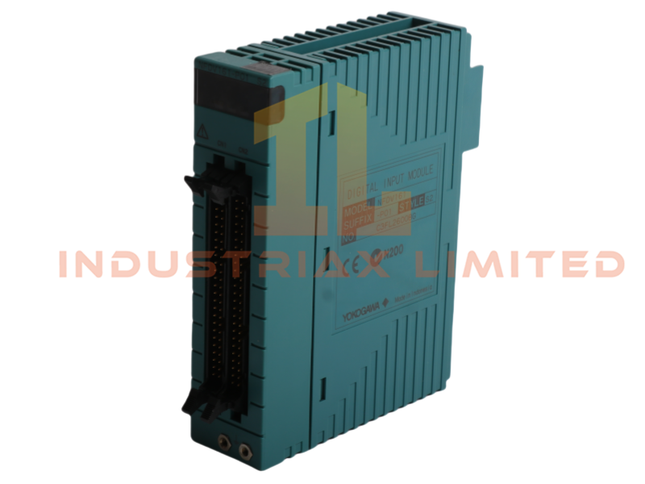
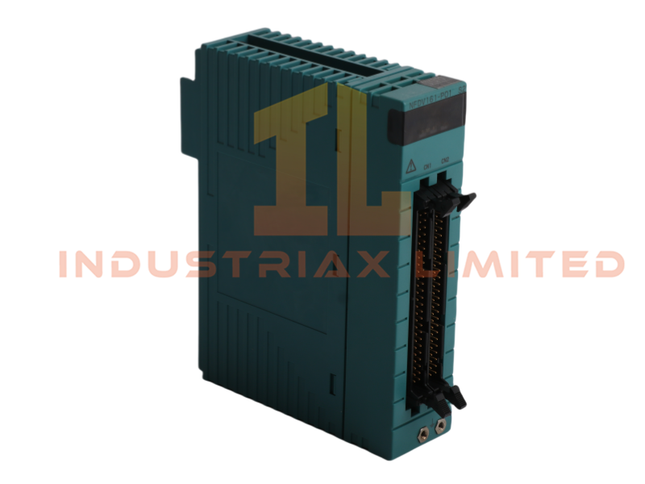
Yokogawa Yokogawa NFDV161-P01 S2 Digital Input Module
Overview The NFDV161-P01 S2 Digital Input Module by Yokogawa functions as a high-performance autonomous controller for valve positioning. Designed for the CENTUM VP DCS platform, it supports 24V DC ON/OFF signals and integrates advanced algorithms for precise feedback-based valve control. Technical Specifications Specification Details Model Number NFDV161-P01 S2 Manufacturer Yokogawa Module Type Autonomous Controller / Digital Input System Compatibility DCS (CENTUM VP Series) Communication Service Ethernet router Signal Type 24V DC ON/OFF Control Function Valve position feedback and adjustment Interface User-friendly configuration panel Weight 0.24 kg Dimensions 3.2 × 10.6 × 13 cm HS Code 8537101190 Origin Japan Condition Brand New Lead Time In Stock Discontinued On Active MOQ 1 Features NFDV161-P01 S2 continuously monitors and adjusts valve position using feedback signals. Advanced control algorithms reduce response time and improve operational accuracy. Supports multiple valve types and integrates easily into existing control systems. Compact design simplifies installation and reduces panel space requirements. Robust construction ensures long-term durability in harsh industrial environments. User interface allows quick setup and efficient troubleshooting.
$200.00 $100.00
-
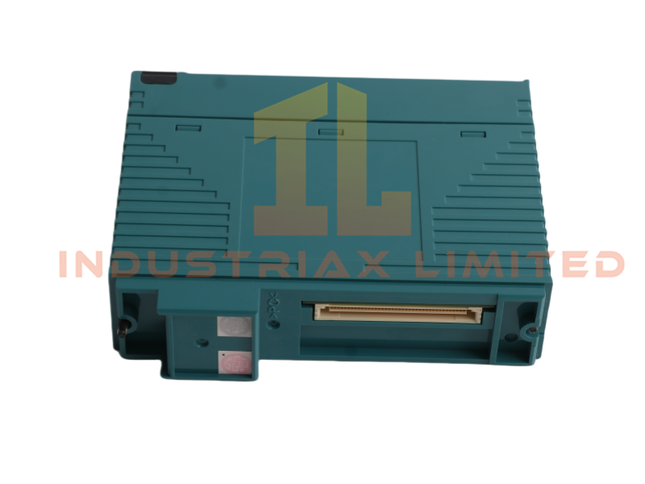
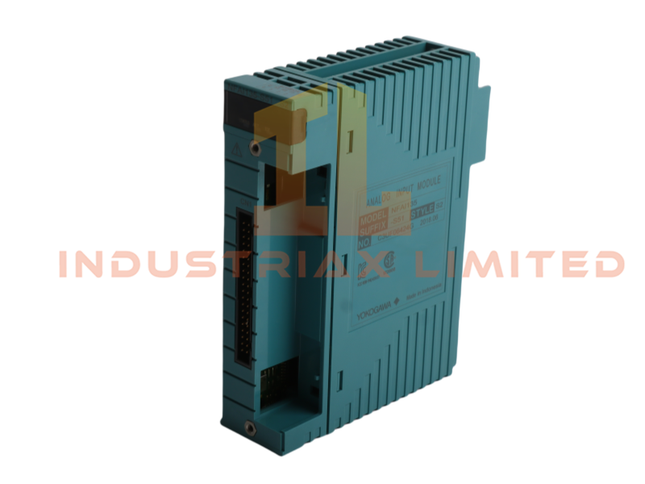
Yokogawa Yokogawa NFAI135-S51 S2-1 Autonomous Controller
Overview The NFAI135-S51 S2-1 Autonomous Controller by Yokogawa delivers high-resolution analog signal acquisition for industrial automation. Designed for the CENTUM VP DCS platform, it supports voltage, current, and resistance inputs with advanced signal processing for precise control. Technical Specifications Specification Details Model Number NFAI135-S51 S2-1 Manufacturer Yokogawa Module Type Autonomous Controller / Analog Input System Compatibility DCS (CENTUM VP Series) Communication Service Ethernet router Input Types Voltage, current, resistance Signal Channels Multiple analog input channels Signal Processing High-resolution, low-noise Calibration Manual and flexible scaling options Weight 0.24 kg Dimensions 3.2 × 10.6 × 13 cm HS Code 8537101190 Origin Japan Condition Brand New Lead Time In Stock Discontinued On Active MOQ 1 Features NFAI135-S51 S2-1 supports real-time analog signal acquisition and control. Multiple input types ensure compatibility with diverse field instruments. Advanced processing delivers stable, high-resolution data with minimal noise. Compact design simplifies installation in modular control systems. Flexible scaling and calibration improve setup efficiency and accuracy. Rugged build ensures long-term performance in harsh industrial environments.
$200.00 $100.00


You have seen 504 out of 594 products