
ABB Egypt Expands Industrial Manufacturing Capacity Through Automation, Sustainability, and Local Production Growth
, 3 min reading time
, 3 min reading time
ABB Egypt is expanding its local manufacturing capabilities, increasing exports, improving energy efficiency, and supporting Egypt’s Industrial Strategy 2030 through advanced electrical solutions, sustainable production, and stronger local supply chains.
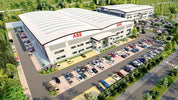
ABB Egypt is expanding its manufacturing footprint as part of its long-term strategy to support Egypt’s industrial development and strengthen the country’s position in electrical and engineering manufacturing. During discussions with Egypt’s Ministry of Industry, ABB presented its investment plans, production capabilities, and contribution to national development initiatives.
The company’s manufacturing operations include its main facility in 10th of Ramadan City, recognized as ABB’s largest production center in the Middle East and Africa, as well as additional factories in Nasr City and the Suez Free Zones. These facilities demonstrate ABB’s commitment to developing local industrial capacity while meeting regional and international market demands.
ABB Egypt has achieved a high level of local content, reaching up to 78% in selected product lines. This reflects the company’s continuous efforts to develop domestic suppliers, improve production localization, and increase value creation within Egypt’s industrial ecosystem.
In 2025, ABB exported approximately 25% of its total production to more than 50 countries. During the first half of 2026, its export network expanded further, reaching more than 60 international markets.
From an industrial perspective, this export growth demonstrates that localized manufacturing can achieve global competitiveness when supported by advanced automation technologies, skilled engineering teams, and efficient supply chains.
ABB is also focusing on reducing energy consumption and carbon emissions across its Egyptian production facilities. The company plans to improve operational efficiency through smarter energy management systems and sustainable manufacturing practices.
In addition, ABB has expressed interest in joining Egypt’s Shams El-Sinaa (Industry Solar Initiative) by installing rooftop solar power systems at its factories. This initiative could help reduce dependence on traditional electricity sources while supporting cleaner industrial production.
For industrial manufacturers, integrating renewable energy with automation platforms is becoming an important step toward improving cost efficiency and achieving long-term sustainability goals.
Egypt’s Ministry of Industry highlighted the electrical and engineering sectors as key priorities within the Industrial Strategy 2030. The government aims to increase domestic production, attract advanced technologies, expand exports, and strengthen local manufacturing capabilities.
The ministry emphasized continued cooperation with ABB by supporting operational development, resolving industrial challenges, and encouraging higher local content levels.
This collaboration reflects a broader trend in emerging industrial markets: governments and technology companies are increasingly working together to build complete manufacturing ecosystems rather than focusing only on individual production facilities.

ABB Egypt Chairman Ahmed Hammad stated that Egypt remains one of ABB’s most strategic markets in the region. With more than 100 years of presence in the country, ABB continues to invest in advanced technologies, engineering capabilities, and industrial solutions.
The company’s focus extends beyond equipment manufacturing. ABB is providing integrated automation, electrification, and energy management solutions designed to improve productivity, reduce energy usage, and enhance industrial sustainability.
In my view as an industrial automation professional, ABB’s expansion in Egypt represents more than a manufacturing investment. It shows how industrial automation, localized production, and sustainable energy strategies are becoming interconnected elements of modern industrial competitiveness. Companies that combine digital technologies with efficient manufacturing models will have stronger advantages in future global markets.

Emerson Electric (EMR) appears broadly fairly valued after a 69.8% three-year gain. This analysis examines its P/E valuation, BP Shah Deniz automation contract, industrial digitalization...

AI benchmark scores provide useful performance indicators, but industrial deployment requires deeper validation. This article explains why engineers must evaluate AI systems through operational context,...

Rockwell Automation and Actemium use AI-driven RtCOP technology with PlantPAx DCS to optimize industrial refrigeration systems, achieving 17% energy savings and improving operational efficiency in...