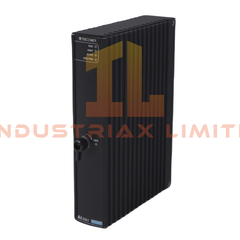
Yokogawa SEC401-11 ESB Bus Coupler Module Configured for ESB backplane inter-module communication in CENTUM distributed control architecture, the Yokogawa SEC401-11...
Read more
Available on working days between 9:00 am to 6:00 pm
Email us: sales2@industriaxplc.com
Available 24/7 for inquiries and support
Description
Yokogawa SEC401-11 ESB Bus Coupler Module
Configured for ESB backplane inter-module communication in CENTUM distributed control architecture, the Yokogawa SEC401-11 (SEC401-11 ESB Bus Coupler Module) provides direct physical/electrical execution for bus master interface coupling across ESB network segments.
SuffixBreakdown & Model Matrix
SEC401-11: Standard ESB Bus Coupler Module with bus master interface functionality
-5: Standard type, no explosion protection
-E: Standard type with explosion protection
Hardware Specifications
Parameter
Specification
ModelBrand
Yokogawa SEC401-11
Origin
Japan
Weight
Approx. 0.24 kg
PowerConsumption
0.5 A
Max Connectable Units
9 modules
Transmission Speed
128 Mbps (I/O data)
Max Transmission Distance
10 m
Interface Type
ESB Bus Coupler (Bus Master Function)
Yokogawa ESB Backplane Communication Characteristics
The SEC401-11 operates within Yokogawa ESB backplane architecture, supporting deterministic module-to-module data exchange across high-speed internal control networks. Within Yokogawa DCS ecosystems, ESB bus topology is typically associated with structured I/O distribution and channel-level signal organization. The coupler provides controlled synchronization of module frames over short-distance backplane segments, ensuring timing alignment for process I/O aggregation. In extended system configurations, ESB bus coupling behavior is aligned with industrial process control requirements such as 4-20 mA signal mapping layers, fieldbus integration layers, and structured I/O segmentation across redundant controller nodes.
Frequently Asked Questions
Q1: Can the SEC401-11 operate with hot-swappable ESB modules? A1: The module behavior depends on system configuration; ESB backplane systems typically require controlled insertion procedures to avoid bus frame interruption and synchronization loss.
Q2: What limits the maximum number of connectable units? A2: The limit of 9 units is defined by ESB bus electrical loading, timing constraints, and backplane signal integrity margins.
Q3: Does transmission distance affect bus timing stability? A3: Yes. At extended ESB coupling distances up to 10 m, signal propagation delay and bus arbitration timing must remain within system tolerance thresholds.
Field Installation Guidelines
Install the SEC401-11 on a grounded ESB backplane rail assembly. Ensure connector alignment is fully seated to maintain bus continuity across adjacent modules. Avoid mechanical stress on bus coupling interfaces during insertion. Shield grounding must be maintained at cabinet frame level to minimize electromagnetic coupling interference across high-speed backplane traces. Do not exceed rated module population per ESB segment to preserve deterministic communication timing.