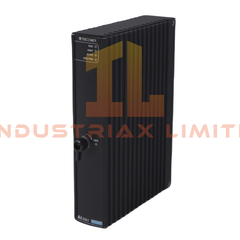
Description
Product Description
Overview
The S9341FA from Yokogawa is a connector unit with an integrated terminator designed for use with the Electric Supply Bus (ESB) network. It provides reliable device connectivity while maintaining signal integrity, ensuring efficient communication across industrial automation systems. This unit is supplied new in its original factory-sealed package.
Technical Specifications
| Parameter |
Specification |
| Model |
S9341FA |
| Function |
Connects devices to the ESB network and integrates a termination resistor to prevent signal reflections at the bus end |
| ESB Bus Compatibility |
Fully compatible with Yokogawa ESB systems for stable communication |
| Connector Ports |
Multiple ports for device connection, supporting potential daisy-chaining of units |
| Termination Resistor |
Built-in resistor to absorb signal reflections and maintain signal quality |
| Construction |
Industrial-grade materials designed to withstand harsh operational environments |
| Input Voltage Options |
100 to 120 VAC 50/60 Hz, 220 to 240 VAC 50/60 Hz, 24 VDC |
| Power Consumption |
100 to 120 VAC: 200 VA, 220 to 240 VAC: 230 VA, 24 VDC: 5.5 A |
Applications
This connector unit is ideal for connecting and terminating devices on Yokogawa ESB networks in industrial control, measurement, and monitoring systems. It ensures high communication reliability in complex automation setups.
Comparison with Similar Models
The S9341FA provides integrated termination, unlike basic ESB connectors, which require separate terminators. It is suitable for both new installations and replacement of existing modules within the ESB network.
FAQ
Q: Is the S9341FA compatible with all Yokogawa ESB networks?
A: Yes, it is designed for full integration within the ESB system, ensuring consistent signal transmission.
Q: Can multiple S9341FA units be used in series?
A: Yes, its connector design supports daisy-chaining while maintaining proper termination.
Q: What environmental conditions can it operate in?
A: Built for industrial settings, it tolerates standard temperature and operational stresses but should avoid direct exposure to water or corrosive environments.