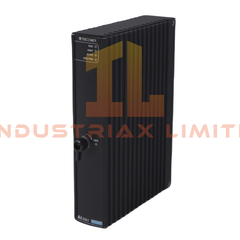
Yokogawa PSCCM22AAN CCM Critical Control Module Configured for safety logic execution and rack-level processor communication in the ProSafe-PLC platform, the...
Read more
Available on working days between 9:00 am to 6:00 pm
Email us: sales2@industriaxplc.com
Available 24/7 for inquiries and support
Description
Yokogawa PSCCM22AAN CCM Critical Control Module
Configured for safety logic execution and rack-level processor communication in the ProSafe-PLC platform, the Yokogawa PSCCM22AAN (PSCCM22AAN Critical Control Module) provides direct physical and electrical execution of Safety Instrumented System control functions through the ProSafe-PLC backplane architecture. The module incorporates onboard processing resources, non-volatile memory, and diagnostic functions for safety application management.
Suffix Breakdown & Model Matrix
The supplied documentation identifies PSCCM22AAN as the complete module designation. Available documentation references associated part numbers including 16418-531/1 and 16418-531/4. No official suffix decoding structure is specified in the provided source material.
Hardware Specifications
Parameter
Specification
Model
PSCCM22AAN
Brand
Yokogawa
Origin
Not specified in provided documentation
Product Type
CCM+ Critical Control Module (CPU Module)
Part Number
16418-531/1, 16418-531/4 (variant dependent)
Input Voltage
24 VDC (+/-15%)
Current Consumption
Max. 0.60 A
Power Consumption
Derived from 24 VDC supply and 0.60 A maximum current
Processor Architecture
Safety-configured microprocessor system
Memory Type
RAM and non-volatile Flash/ROM
Typical ROM Version
3.03 (version dependent)
Backplane Interface
ProSafe-PLC rack interface
Internal Communication
+/-15 VDC internal bus signaling
Redundancy Support
Dual-redundant processor deployment supported
Operating Temp
0 degC to +60 degC
Storage Temp
-40 degC to +85 degC
Relative Humidity
5% to 95% RH, non-condensing
Protection Class
IP20
Certifications
CE, RoHS
Dimensions
5.1 cm x 25.4 cm x 30.5 cm
Weight
1.9 kg
Channel-to-Channel Isolation and Process Control Integration
Within process control and safety system environments, the PSCCM22AAN operates through the ProSafe-PLC backplane communication structure rather than direct field signal acquisition. System architectures utilizing this module may incorporate channel-to-channel isolated I/O subsystems and process instrumentation networks connected through associated interface modules. Communication between processor and rack modules is performed through the internal bus infrastructure, supporting processor redundancy configurations and fault diagnostic exchange.
Frequently Asked Questions
Q: Does the PSCCM22AAN support redundant processor operation? A: Yes. The provided documentation specifies support for dual-redundant deployment configurations intended to reduce single-point processor failures within ProSafe-PLC safety systems.
Q: Can the module be replaced while the system remains energized? A: Hot replacement capability is referenced when the processor is installed within an appropriately configured redundant architecture. Actual replacement procedures should follow the applicable ProSafe-PLC maintenance documentation.
Q: What power supply requirements apply to the module? A: The module requires a 24 VDC power source with a tolerance of +/-15% and a maximum current consumption of 0.60 A.
Field Installation Guidelines
Verify rack slot assignment and processor redundancy configuration before insertion.
Confirm 24 VDC supply voltage remains within specified tolerance limits prior to energization.
Maintain cabinet grounding according to site electrical standards and manufacturer installation requirements.
Route power wiring and communication wiring separately where practical to reduce conducted electrical interference.
Ensure ventilation paths within the control cabinet remain unobstructed.
Observe electrostatic discharge protection procedures during handling and installation.
Validate processor synchronization and diagnostic status following module replacement in redundant systems.
Record firmware and ROM revision information before maintenance activities to support compatibility verification.