Available on working days between 9:00 am to 6:00 pm
Email us: sales2@industriaxplc.com
Available 24/7 for inquiries and support
Description
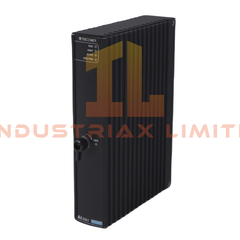
Yokogawa NFSBT02 SB Bus T-joint Module
Configured for SB Bus line branching and physical signal distribution in the STARDOM control system, the Yokogawa NFSBT02 (NFSBT02 SB Bus T-Joint connector) provides direct physical/electrical execution for SB Bus extension topology between FCN controllers and remote I/O racks.
Suffix Breakdown & Model Matrix
NFSBT02 is a fixed hardware identifier for SB Bus T-joint assembly. No further factory-defined suffix segmentation is specified in provided documentation. The unit functions as a passive branching interface used with SB Bus repeat architecture.
Hardware Specifications
Parameter
Specification
ModelBrand
Yokogawa NFSBT02
Origin
USA
Weight
0.06 kg
Dimensions
11.1 x 3.2 x 2.3 cm
OperatingTemp
N/A
PowerConsumption
5 VDC +/-5%, max 500 mA (system dependent SB Bus load)
Baud Rate
128 Mbps
Transmission Distance
Max 8 m per line
Extension Units
Max 2 units
Function
SB Bus T-joint / branching connector
Electrical Nature
Passive bus interconnect module
SB Bus Signal Distribution Architecture
The NFSBT02 operates as a passive mechanical-electrical junction for SB Bus routing inside Yokogawa STARDOM FCN configurations. It interfaces directly with SB Bus repeat modules and maintains controlled impedance continuity across daisy-chain segments. The topology is intended for short-distance high-speed backplane extension, where signal integrity depends on correct termination placement at the final node.
Within Yokogawa process automation systems, SB Bus communication infrastructure coexists with control-level protocols such as 4-20 mA HART loops and FOUNDATION Fieldbus segments, enabling layered separation between field instrumentation and controller backplane communication. While NFSBT02 itself does not process analog signals, it participates in deterministic bus segmentation supporting modular rack expansion behavior.
Frequently Asked Questions
Q: Can NFSBT02 be hot-swapped during system operation? A: No hot-swap behavior is defined. Physical disconnection may interrupt SB Bus continuity and cause communication loss across downstream modules.
Q: Does the module require external power injection? A: No. The NFSBT02 is a passive connector. Power is only present on the SB Bus system line via connected controller or repeat modules.
Q: Is termination required at the final SB Bus node? A: Yes. The last segment of the SB Bus chain requires a dedicated terminator to prevent signal reflection and communication instability.
Field Installation Guidelines
Ensure SB Bus cables are fully seated into the NFSBT02 connector ports before system power application. Maintain controlled cable routing to avoid excessive bending radius or mechanical stress at connector joints. The final node in any SB Bus chain must be fitted with a proper termination module to maintain impedance balance. Avoid mixed routing with unrelated communication buses to reduce coupling effects and maintain deterministic backplane behavior.