Available on working days between 9:00 am to 6:00 pm
Email us: sales2@industriaxplc.com
Available 24/7 for inquiries and support
Description
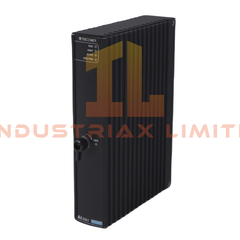
Yokogawa NFAR181-S50 RTD Input Module
The Yokogawa NFAR181-S50 also cataloged as the NFAR181 RTD Input Module, operates as a dedicated hardware component for resistance temperature signal acquisition within Yokogawa STARDOM controller I/O networks.
Suffix Breakdown & Model Matrix
Model designation NFAR181-S50 does not include a publicly specified structured suffix decomposition beyond series identifier and configuration code. No additional sub-variant logic is defined in the provided technical dataset.
Hardware Specifications
Parameter
Specification
ModelBrand
Yokogawa NFAR181-S50
Origin
Japan
Weight
0.2 kg
Dimensions
Not specified
OperatingTemp
Not specified
PowerConsumption
450 mA @ 5 VDC
Input Channels
12 channels, isolated
Input Type
Pt100 / JPt100, 3-wire
Measurement Current
1 mA
Input Range
-200 to 800 degC
Accuracy
±0.15 degC
Update Cycle
1 s
Withstanding Voltage
1500 VAC (1 min, input to system)
Input Resistance
>= 2 MOhm (power ON/OFF)
Burnout Detection
Configurable per channel
Channel-to-Channel Isolation and Cold Junction Compensation Architecture
The Yokogawa NFAR181-S50 implements per-channel galvanic isolation across all 12 RTD inputs, reducing cross-channel coupling under mixed lead resistance conditions. Cold junction compensation (CJC) logic is internally applied for RTD linearization and reference junction correction within the acquisition pipeline. Measurement excitation is fixed at 1 mA per channel, ensuring stable voltage conversion across Pt100 elements under varying loop resistance conditions. The architecture prioritizes deterministic sampling with a 1 s refresh cycle aligned to controller scan timing.
Frequently Asked Questions
Q1: Does the module support hot-swap insertion under live backplane power? A1: Hot-swap capability is not specified. Installation should be performed with backplane power removed to avoid transient excitation on RTD input circuits.
Q2: What is the impact of channel isolation on measurement timing? A2: Isolation is implemented at channel level without altering the 1 s data refresh cycle. No inter-channel timing skew parameters are defined in the provided specification.
Q3: Can lead wire resistance be compensated automatically? A3: Compensation is inherently supported through 3-wire RTD configuration with matched line resistance requirement across all conductors.
Field Installation Guidelines
RTD inputs shall be wired using 3-wire Pt100 configuration with equalized conductor resistance per channel. Shielding should be terminated at a single earth reference point to minimize ground loop formation. Maintain separation between RTD signal cables and high-voltage switching lines to reduce induced noise coupling. Ensure terminal torque and insertion integrity according to rack-side connector specification before energizing the system.