Available on working days between 9:00 am to 6:00 pm
Email us: sales2@industriaxplc.com
Available 24/7 for inquiries and support
Description
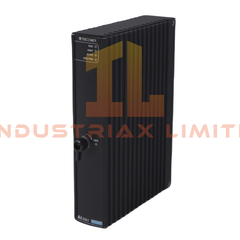
Yokogawa AMM22 Multiplexer Input Module
The Yokogawa AMM22 also cataloged as the AMM22 Multiplexer Input Module, operates as a dedicated hardware component for analog signal multiplexing and acquisition within distributed control system (DCS) I/O architectures.
Configured for high-speed analog input aggregation in Yokogawa control and monitoring platforms, the Yokogawa AMM22 (AMM22 Multiplexer Input Module) provides direct physical/electrical execution.
Suffix Breakdown & Model Matrix
AMM22 is referenced as a single fixed hardware model designation. No structured suffix segmentation or option code breakdown is defined in the provided specification set. Functional interpretation is limited to base module identity.
Hardware Specifications
Parameter
Specification
Model
AMM22
Brand
Yokogawa
Origin
Not specified
Weight
1 kg
Dimensions
28 cm x 21 cm x 2 cm
OperatingTemp
-10 degC to +55 degC
PowerConsumption
24 VDC supply
Input Type
Multiplexed analog inputs
Conversion Rate
1 kHz high-speed conversion
Output Signal
4-20 mA DC
Yokogawa Analog Signal Conditioning and Channel Multiplexing Architecture
The AMM22 module operates within a process control I/O framework consistent with Yokogawa DCS analog handling design, where 4-20 mA loop signals are acquired through multiplexed channel scanning. The input stage is aligned with channel-to-channel isolation design principles typically used to reduce measurement interference during high-density analog acquisition. Signal conditioning is executed prior to conversion, supporting stable transmission into downstream controller processing layers.
Frequently Asked Questions
Q: Does the AMM22 support direct 4-20 mA loop interfacing without external conditioning? A: The module accepts 4-20 mA DC input signals as specified. External conditioning requirements depend on upstream field transmitter configuration and loop power arrangement.
Q: What is the impact of the 1 kHz conversion rate on multiplexed channel scanning? A: A 1 kHz conversion rate defines the maximum aggregate sampling frequency for the module. Effective per-channel update rate depends on active channel count and internal scanning sequence allocation.
Q: Is channel isolation implemented per input channel? A: Channel isolation characteristics are not explicitly specified in the provided data. Isolation behavior should be verified against system-level Yokogawa I/O architecture design.
Field Installation Guidelines
Ensure 24 VDC supply stability before energizing the module. Maintain correct polarity and avoid voltage ripple exceeding standard industrial control tolerances.
Install the module within a grounded cabinet structure. Shielded analog cables should be terminated with single-point grounding to minimize loop noise and avoid ground loop formation.
Maintain separation between analog signal wiring and high-voltage or high-frequency conductors. This reduces electromagnetic coupling during multiplexed sampling operations.
Verify correct terminal seating and mechanical fixation before system commissioning. Avoid live insertion unless the system rack explicitly supports hot-swap operation.