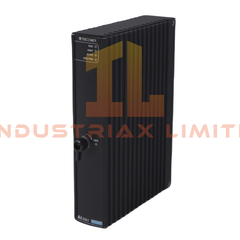
Yokogawa AKB337-M015 Signal Cable The Yokogawa AKB337-M015, also cataloged as the AKB337 Signal Cable, operates as a dedicated hardware component...
Read more
Available on working days between 9:00 am to 6:00 pm
Email us: sales2@industriaxplc.com
Available 24/7 for inquiries and support
Description
Yokogawa AKB337-M015 Signal Cable
The Yokogawa AKB337-M015, also cataloged as the AKB337 Signal Cable, operates as a dedicated hardware component for high-fidelity signal transmission between I/O modules such as ADV161 and ADV561 within Yokogawa DCS platforms. It provides stable electrical pathways for 50-pin interconnections in industrial process control networks.
Hardware Specifications
Parameter
Specification
ModelBrand
Yokogawa AKB337-M015
Origin
Japan
Weight
Approx. 0.4 kg
Dimensions
15 meters length, 7.5 mm diameter
OperatingTemp
-20 to +70 degC
PowerConsumption
N/A (passive signal cable)
CableType
Signal Cable, 50-pin to 50-pin
ConductorResistance
0.12 ohm/m
Capacitance
100 pF/m
Impedance
120 ohm
ConnectorType
Solderless lug with M4 screws
JacketMaterial
PVC, UL1581 flame retardant
MinimumBendRadius
75 mm (10 x cable diameter)
FlexLife
1 million cycles
Application
Connects Yokogawa I/O modules to terminal boards or interface units
CompatibleSystems
CENTUM VP, CENTUM CS 3000
Process Control Signal Integrity
The AKB337 cable design maintains channel-to-channel isolation to reduce crosstalk and signal degradation over extended distances. It is suitable for analog and digital loop communication, supporting 4-20 mA HART protocol and interfacing with FOUNDATION Fieldbus or Profibus PA systems when integrated with compatible I/O modules. The PVC jacket provides environmental shielding and limited EMI suppression.
Frequently Asked Questions
Q: Can the AKB337 cable be hot-swapped while modules are powered? A: No. Connectors must be de-energized before insertion or removal to prevent signal errors and potential module damage.
Q: How should the cable be routed to minimize interference? A: Avoid parallel routing alongside high-voltage power lines. Maintain separation and utilize grounded metallic trays if available.
Q: Are there any specific connector torque requirements? A: Use standard M4 screw torque values (approximately 0.5 to 0.6 N·m) to ensure secure mechanical and electrical contact without deforming the connector.
Field Installation Guidelines
Align connector pins carefully before tightening screws to avoid misalignment.
Respect minimum bend radius (75 mm) to prevent internal conductor stress.
Avoid tight looping or repeated sharp bends during installation.
Shielded cables should be grounded at one end to maintain noise immunity.
Maintain separation from high-voltage or high-current power lines to reduce EMI risk.
Use cable management channels or trays to prevent mechanical strain and accidental disconnections.