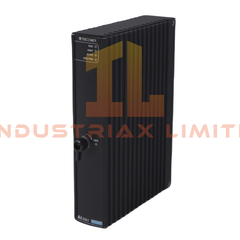
Yokogawa AFV10D-S41101 Duplexed Field Control Unit The Yokogawa AFV10D-S41101, also cataloged as the AFV10D Duplexed Field Control Unit, operates as...
Read more
Available on working days between 9:00 am to 6:00 pm
Email us: sales2@industriaxplc.com
Available 24/7 for inquiries and support
Description
Yokogawa AFV10D-S41101 Duplexed Field Control Unit
The Yokogawa AFV10D-S41101, also cataloged as the AFV10D Duplexed Field Control Unit, operates as a dedicated hardware component for executing regulatory and sequence control logic within CENTUM VP Distributed Control System platforms.
Hardware Specifications
Parameter
Specification
ModelBrand
Yokogawa
Origin
Japan
Weight
8 kg (fully populated with dual CPU and dual power modules)
Dimensions
Approx. 5.1 cm x 20.3 cm x 14.6 cm per sub-card; standard 19-inch rack chassis
OperatingTemp
0 degC to 55 degC
OperatingHumidity
5% to 95% RH, non-condensing
ProcessorType
VR5432 RISC, 133 MHz
MainMemory
32 MB ECC
ControlScanPeriod
Configurable: 50 ms / 100 ms / 200 ms / 1 s
PowerSupply
100–120 V AC, 50/60 Hz, 200 VA
Backup
72-hour battery memory retention
NetworkProtocol
Vnet/IP, 1 Gbps / 100 Mbps Full Duplex auto-negotiation
Ports
Dual-redundant RJ45 (CAT5e or better)
MaxIONodes
14 (9 local ESB, 5 remote ER)
StatusContacts
2 terminals, NC/C, 30 V DC, 0.3 A max
Process Control Features
The AFV10D-S41101 implements channel-to-channel isolation to prevent data interference between adjacent I/O channels. Cold junction compensation (CJc) is applied across temperature sensors to maintain analog signal integrity. The module supports 4-20 mA HART loop protocol for direct communication with field instruments and can interface with FOUNDATION Fieldbus and Profibus PA networks. Failover between duplexed CPUs occurs in milliseconds, ensuring uninterrupted control execution and continuous data logging.
Frequently Asked Questions
Q: What is the failover time between redundant CPUs? A: Redundant CPU failover occurs within milliseconds without disrupting process control loops.
Q: Can the AFV10D-S41101 handle hot-swappable I/O modules? A: Local ESB Bus Node modules can be replaced or added with the FCU powered, provided the ESB coupler is properly installed.
Q: Is firmware upgrade compatible with both active and standby CPUs? A: Yes, firmware can be updated sequentially on standby first to maintain control continuity.
Field Installation Guidelines
Mount the unit in a standard 19-inch rack using 8 x M5 screws with insulation bushes.
Maintain a minimum of 100 mm clearance around the chassis for airflow.
Connect redundant Vnet/IP cables using CAT5e or higher-rated UTP and ensure proper termination at the switch.
Ground the chassis to plant earth; avoid sharing the same conductor with high-power equipment to prevent interference.
Install ESB Bus Coupler Module in Slot 7 or 8 for local I/O node connectivity.
Observe input voltage tolerance (85–132 V AC) to prevent overvoltage or undervoltage faults.