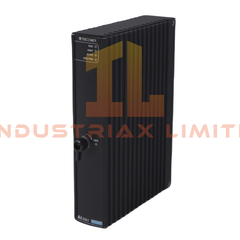
Yokogawa AFF50D-H41111 Analog I/O Module Configured for analog signal acquisition in distributed control loop interfacing within DCS field input/output subsystems,...
Read more
Available on working days between 9:00 am to 6:00 pm
Email us: sales2@industriaxplc.com
Available 24/7 for inquiries and support
Description
Yokogawa AFF50D-H41111 Analog I/O Module
Configured for analog signal acquisition in distributed control loop interfacing within DCS field input/output subsystems, the Yokogawa AAI141 / AAV141 / AAV142 / AAB141 Analog I/O Module operates as a direct electrical signal conversion interface between 4-20 mA DC / 1-5 V DC / -10 to 10 V DC field transmitters and controller-side data acquisition buses within Yokogawa CENTUM platforms.
Suffix Breakdown & Model Matrix
AAI141, AAV141, AAV142, and AAB141 represent distinct analog input/output module variants within the same non-isolated 16-channel I/O family. Each variant is configured for specific signal type handling (current or voltage input ranges) and terminal implementation style (e.g., pressure clamp, KS cable, MIL connector compatibility). No additional structural decomposition is defined in the provided specification.
Hardware Specifications
Parameter
Specification
ModelBrand
AFF50D-H41111
Origin
Not specified
Weight
0.2 kg
PowerConsumption
5 VDC: 310 mA / 24 VDC: 450 mA
Input Channels
16 channels, non-isolated
Input Signal Types
4-20 mA DC, 1-5 V DC, -10 to 10 V DC
Input Resistance (Power ON)
400 ohm (20 mA) to 1000 ohm (4 mA), 1 Mohm or larger
Input Resistance (Power OFF)
340 kohm to 660 kohm (variant dependent), 500 kohm or larger
Pressure clamp terminal, KS cable, MIL connector cable
Yokogawa 4-20 mA Signal Acquisition Characteristics
The module processes analog loop signals using 4-20 mA current input scaling with defined input resistance variation across operating range. Channel sampling is executed with a 10 ms update cycle and 100 ms step response behavior, supporting deterministic acquisition timing for controller-side data processing. The internal transmitter power supply output supports up to 27 mA current limiting for 2-wire field devices.
The analog front-end design is aligned with Yokogawa DCS signal conditioning architecture, including support for mixed voltage and current input termination across 16-channel parallel acquisition paths without channel isolation.
Frequently Asked Questions
Q: Does the module support hot-swap replacement during operation? A: Hot-swap capability is not specified in the provided electrical and mechanical definition. Replacement should assume system power-down or rack maintenance mode unless system-level redundancy documentation defines otherwise.
Q: What is the backplane power load behavior under full channel utilization? A: Maximum current consumption is defined as 310 mA at 5 VDC and 450 mA at 24 VDC. Full channel loading does not modify backplane limits beyond these specified values.
Q: Is channel-to-channel electrical isolation implemented? A: The input architecture is defined as 16-channel non-isolated, therefore channels share a common reference structure without galvanic separation.
Field Installation Guidelines
Signal cabling shall maintain separation from high-voltage and switching power lines to reduce induced noise on 4-20 mA and low-voltage input loops. Shield termination should be executed at a single grounding point on the cabinet side to prevent ground loop formation. Terminal tightening must follow manufacturer-specified pressure clamp torque requirements for stable contact resistance.
For KS cable or MIL connector variants, verify pin alignment prior to insertion to avoid misrouting of analog channels. Transmitter loops should be validated under power-on resistance conditions before commissioning to ensure correct input scaling across all active channels.