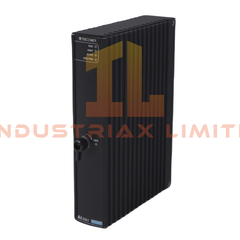
Yokogawa ADM52C S3 Analog Recorder Configured for continuous process signal recording in analog acquisition systems, the Yokogawa ADM52C S3 (ADM52C...
Read more
Available on working days between 9:00 am to 6:00 pm
Email us: sales2@industriaxplc.com
Available 24/7 for inquiries and support
Description
Yokogawa ADM52C S3 Analog Recorder
Configured for continuous process signal recording in analog acquisition systems, the Yokogawa ADM52C S3 (ADM52C S3 Analog Recorder) provides direct physical/electrical execution of multi-channel measurement logging across DC voltage, DC current, thermocouple, and RTD input interfaces.
Suffix Breakdown & Model Matrix
ADM52C: Base recorder series designation (as provided)
S3: Revision / configuration suffix (not further specified in provided technical data)
No additional factory-defined decoding information is available in the supplied dataset.
Hardware Specifications
Parameter
Specification
ModelBrand
Yokogawa ADM52C S3
Origin
Not specified
Weight
Approx. 3.5 kg
Dimensions
144 x 144 x 265 mm (panel cutout 138 x 138 mm)
OperatingTemp
0 to 50 degC
PowerConsumption
Not specified
Input Channels
3 channels
Recording Method
Dot line recording with dual pens
Chart Speed
10 to 100 mm/h (6 selectable steps)
Input Types
DC voltage, DC current, thermocouple, RTD
Accuracy
+/-0.1% of span
Power Supply
100 to 240 VAC, 50/60 Hz
Channel-to-Channel Isolation and Input Conditioning (Yokogawa Process Recorder Architecture)
The input architecture implements isolated measurement front-ends for each acquisition channel, supporting mixed-signal conditioning across voltage, current, and resistance temperature devices. Thermocouple and RTD inputs rely on internal compensation routines consistent with cold junction compensation (CJC) principles for stable reference junction handling. Signal routing is optimized for low drift analog amplification prior to mechanical chart recording via dual-pen dot line mechanism.
Frequently Asked Questions
Q: Can the ADM52C S3 simultaneously process mixed input types across channels? A: Yes. Each channel supports independent configuration for DC voltage, DC current, thermocouple, or RTD input types.
Q: What is the impact of chart speed selection on data resolution? A: Chart speed (10 to 100 mm/h in 6 steps) directly affects temporal resolution of recorded traces; higher speed increases time-axis granularity.
Q: Does the device require external signal conditioning modules? A: No external conditioning is required for standard supported inputs; internal scaling and isolation are integrated at channel level.
Field Installation Guidelines
Mount unit in a standard panel cutout of 138 x 138 mm with secure mechanical fixation to prevent vibration-induced chart distortion
Maintain wiring separation between signal input lines and AC power supply (100 to 240 VAC) to reduce electromagnetic coupling
Ensure thermocouple and RTD wiring uses appropriate compensation conductors and correct polarity alignment
Confirm ambient operating conditions remain within 0 to 50 degC range for mechanical recorder stability
Provide adequate rear clearance for ventilation and terminal access during maintenance operations