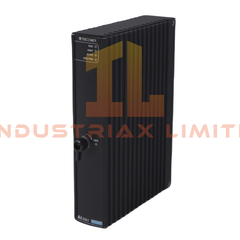
Yokogawa AMM12C Voltage Input Multiplexer Module The Yokogawa AMM12C, also cataloged as the AMM12C Voltage Input Multiplexer Module, operates as...
Read more
Available on working days between 9:00 am to 6:00 pm
Email us: sales2@industriaxplc.com
Available 24/7 for inquiries and support
Description
Yokogawa AMM12C Voltage Input Multiplexer Module
The Yokogawa AMM12C, also cataloged as the AMM12C Voltage Input Multiplexer Module, operates as a dedicated hardware component for sequential scanning and sampling of multiple DC voltage signals within CENTUM CS, CENTUM CS 1000/3000, and early CENTUM VP RIO networks.
HardwareSpecifications
Parameter
Specification
ModelBrand
AMM12C
Origin
Yokogawa, Japan
Weight
0.3 kg
Dimensions
Standard I/O Nest / Backplane form factor
OperatingTemp
-10 degC to +55 degC
PowerConsumption
Dependent on backplane slot rating
Number of Channels
16
Input Signal Types
0-5 V, 1-5 V, 0-10 V DC
Accuracy
±0.1% of full scale
Data Scan / Refresh Cycle
1 s
Isolation
Channel-to-channel and channel-to-system
Redundancy
Dual-redundant support
Mounting
Backplane / I/O Nest
FrequentlyAskedQuestions
Q: Does the AMM12C support hot-swap replacement in a running system? A: No, the module requires system power-down before removal or installation to maintain signal integrity and prevent backplane damage.
Q: What is the expected channel scan rate? A: Each module sequentially scans all 16 channels with a typical refresh cycle of 1 second per full scan.
Q: Can the module firmware be upgraded? A: The AMM12C is a legacy RIO component with no firmware upgrade capability; configuration changes are performed through the host DCS engineering software.
FieldInstallationGuidelines
Ensure all input voltage signals are within the rated range (0-5 V, 1-5 V, 0-10 V DC).
Properly seat the module in the I/O nest or backplane slot to maintain signal continuity and redundancy failover.
Connect shielding and ground wires according to Yokogawa RIO wiring standards to minimize electrical noise.
Maintain at least 10 mm spacing between adjacent modules when possible to aid heat dissipation.
Avoid routing high-current or switching signals alongside input wiring to reduce induced noise.
Observe ambient temperature limits and humidity constraints to ensure stable module operation.