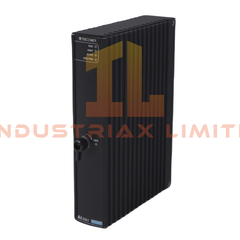
Configured for absolute structural vibration measurement in Bently Nevada 3300 and 3500 monitoring systems, the Bently Nevada 16699-03-02-02 (16699 Velocity Seismoprobe Transducer) provides direct electromechanical conversion of casing motion into a proportional analog voltage signal.
Suffix Breakdown & Model Matrix
Code Segment
Definition
16699
Core Moving-Coil Velocity Transducer Model
-03
Orientation Configuration (Vertical or specific angular mounting optimized for defined RPM thresholds)
-02
Mounting Base Option (Standard circular/flanged base for machine casing stud attachment)
-02
Connector/Termination Option (Side/Top terminal block or MIL-C-5015 connector with basic hazard approvals)
Hardware Specifications
Parameter
Specification
Model
16699-03-02-02
Brand
Bently Nevada
Origin
USA
Weight
Approx. 0.5 kg
Dimensions
Cylindrical Housing, Standard Industrial Length
Operating Temp
-29 deg C to +121 deg C
Power Consumption
Passive (Self-Generating, No External Power Required)
Transducer Type
Moving-Coil Velocity Seismoprobe
Measurement Type
Absolute Structural / Casing Vibration Velocity
Sensitivity
500 mV/in/sec (19.7 mV/mm/sec) +/- 5 % at 100 Hz
Frequency Range
4.5 Hz to 2,000 Hz (270 to 120,000 CPM) +/- 3 dB
Resonant Frequency
> 4.5 kHz
Transverse Sensitivity
<= 5 % of Axial Sensitivity
Output Signal
Analog Voltage Proportional to Velocity
Output Impedance
350 Ohm Nominal
Enclosure Rating
Industrial Sealed Construction (IP65 Equivalent)
Rotor Dynamics and Cross-Talk Suppression
The 16699 series utilizes a moving-coil architecture that minimizes phase shift across the operational frequency band, ensuring accurate representation of rotor dynamic behavior. The internal damping mechanism is calibrated to suppress cross-talk from orthogonal vibration components, maintaining signal integrity during complex multi-axis shaft movement. This design ensures that the output voltage remains linearly proportional to casing velocity without requiring external signal conditioning for gain adjustment.
Frequently Asked Questions
Q: Does the 16699-03-02-02 require calibration when replacing an existing unit?
A: No. The passive moving-coil design maintains fixed sensitivity (500 mV/in/sec). Replacement does not require re-calibration of the monitoring system, provided the original scaling factors are retained.
Q: What is the minimum bending radius for the interconnecting cable?
A: Maintain a minimum bend radius of 25 mm to prevent insulation damage and maintain signal shielding effectiveness.
Field Installation Guidelines
Install the transducer on a rigid, flat surface free of paint, rust, or debris to ensure acoustic coupling. Use the specified mounting stud and tighten to the recommended torque value to prevent resonance shifts. For hazardous area applications, verify the termination option matches the site wiring method and conduit sealing requirements. Ground the shield drain wire at the monitoring system end only to avoid ground loops.