Available on working days between 9:00 am to 6:00 pm
Email us: sales2@industriaxplc.com
Available 24/7 for inquiries and support
Description
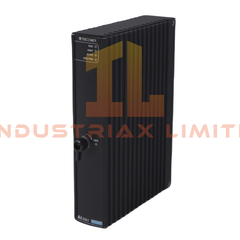
Yokogawa SSB401-53 ESB Bus Interface Slave Module
Configured for ESB bus signal transport between safety node level hardware and Vnet/IP optical repeater infrastructure, the Yokogawa SSB401-53 (SSB401-S53 ESB Bus Interface Slave Module) provides direct electrical-to-optical communication interface execution within ESB Bus extended topology systems.
The module processes ESB bus frame conversion and forwards synchronized I/O communication streams between safety control units and distributed node architectures using copper-to-optical transition via ESB repeater chains. It is intended for dual-stage optical extension using SNT-based repeater modules with defined attenuation control requirements.
Suffix Breakdown & Model Matrix
No explicit manufacturer-disclosed suffix segmentation logic for "SSB401-53" is provided in the supplied technical data. The suffix is treated as a configuration/standard designation without further decomposable engineering parameters.
Hardware Specifications
Parameter
Specification
Model
SSB401-53 / SSB401-S53
Brand
Yokogawa
Origin
Japan
Weight
Approx. 0.3 kg
PowerConsumption
0.5 A (system supply dependent)
Communication Type
ESB Bus optical/electrical conversion
Optical Distance Range
5 km to 50 km (two-stage extension)
Optical Attenuation
3 to 4 dB (between repeater nodes)
Connection Topology
Star type / Chain type
Process Control ESB Bus Optical Transport Characteristics
The ESB Bus interface architecture under Yokogawa integrates deterministic bus synchronization with optical conversion staging for distributed node networks. Signal integrity is maintained through controlled attenuation design between SNT411/SNT511 repeater pairs, requiring fixed attenuation compensation when fiber loss is below 3 dB.
Optical transport layer behavior is constrained to Vnet/IP-associated ESB routing, ensuring structured frame forwarding between safety node units and central safety control processing layers without protocol translation beyond ESB encapsulation.
Frequently Asked Questions
Q: Does the SSB401-53 support hot-swap replacement under live ESB bus operation? A: The module is typically designed for controlled maintenance insertion/removal within ESB rack systems. Hot-swap capability depends on system configuration and redundancy design of the safety node rack.
Q: What is the limitation on ESB bus optical extension stages? A: The optical extension architecture supports a maximum of two repeater stages between ESB endpoints, as defined by system-level repeater pairing (SNT master/slave chain configuration).
Q: Is attenuation compensation required for all fiber installations? A: If fiber attenuation is below 3 dB, an external attenuator must be inserted to maintain defined optical budget alignment between ESB repeater modules.
Field Installation Guidelines
ESB Bus interface modules shall be installed in dedicated safety node racks with verified backplane seating alignment. Fiber connections must maintain controlled bend radius limits and be routed separately from high-noise power conductors.
Optical connectors between SNT repeater modules must be cleaned prior to installation to avoid insertion loss drift. Attenuation balancing must be verified using calibrated optical power measurement at both endpoints before commissioning.
Electrical grounding of the node rack shall follow single-point grounding topology to avoid differential noise injection into ESB communication layers.