Description
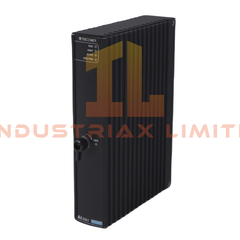
Yokogawa SDV144-S33 Digital Input Module
Configured for 24 VDC discrete signal acquisition in CENTUM DCS I/O subsystem, the Yokogawa SDV144-S33 (SDV144-S33 Digital Input Module) provides direct physical/electrical execution. The module implements 16-channel isolated digital input processing with a maximum 40 ms response time, supporting field signal interfacing under 24 V DC external excitation. Internal architecture separates field and system domains through module-level isolation and 2 kV AC withstand voltage design.
The unit is designed for multi-channel ON/OFF state acquisition with aggregated input line protection and backplane power utilization at 5 V DC and 24 V DC domains. It is intended as a discontinued product, with SDV144-S63 identified as the replacement variant.
Hardware Specifications
| Parameter |
Specification |
| ModelBrand |
Yokogawa SDV144-S33 |
| Origin |
Not specified |
| Weight |
N/A |
| Dimensions |
N/A |
| OperatingTemp |
Not specified |
| PowerConsumption |
5 V DC: 290 mA max; 24 V DC: 140 mA max |
| Input Channels |
16-channel |
| Input Response Time |
40 ms max |
| External Supply |
24 V DC +20% / -10% |
| Withstanding Voltage |
2 kV AC (input to system, 1 minute) |
| Isolation |
Module-level isolation, input group collectively connected |
Channel Isolation and Field Signal Conditioning (Yokogawa DCS Architecture)
The SDV144-S33 implements channel-group isolation architecture typical of Yokogawa CENTUM I/O design, where field input lines are electrically separated from internal logic circuitry. This structure supports reduction of cross-channel interference in dense discrete signal environments.
In process control systems utilizing 24 VDC switching devices, the module operates with input buffering and signal conditioning prior to backplane transmission. The 2 kV AC dielectric withstand rating defines insulation boundary integrity between field wiring and control system electronics under transient voltage conditions.
Frequently Asked Questions
Q: Can the SDV144-S33 support hot-swapping in a live system?
A: Hot-swap capability is dependent on system rack design; the module itself interfaces via backplane connector and does not define standalone hot-insertion behavior.
Q: What is the significance of the 40 ms input response time?
A: The 40 ms maximum response defines worst-case state detection delay for ON/OFF transition recognition across all 16 channels.
Q: Are channels individually isolated?
A: The design specifies module-level isolation with grouped input wiring; individual channel isolation is not indicated.
Field Installation Guidelines
Ensure all field wiring is terminated according to 24 V DC discrete input standards, with correct polarity and secure terminal torque as defined by the rack system specification.
Maintain separation between field signal cables and power lines to reduce electromagnetic coupling in high-density control cabinets.
Verify dielectric integrity before energizing by performing insulation resistance checks consistent with 2 kV AC rated isolation boundary requirements.
Confirm backplane seating alignment prior to powering the I/O node to avoid connector pin stress or partial engagement.