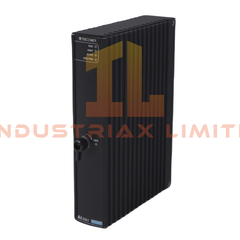
Yokogawa SNB10D-425/CU2T Safety Node Unit The Yokogawa SNB10D-425/CU2T, also cataloged as the SNB10D-425 Safety Node Unit, operates as a dedicated...
Read more
Available on working days between 9:00 am to 6:00 pm
Email us: sales2@industriaxplc.com
Available 24/7 for inquiries and support
Description
Yokogawa SNB10D-425/CU2T Safety Node Unit
The Yokogawa SNB10D-425/CU2T, also cataloged as the SNB10D-425 Safety Node Unit, operates as a dedicated hardware component for transmitting analog input and contact signals to the Safety Control Unit within ProSafe-RS systems. It integrates dual-redundant power modules and ESB bus interfaces to maintain continuous data and power flow for safety I/O modules.
Hardware Specifications
Parameter
Specification
Model Brand
Yokogawa
Origin
Japan
Weight
5.9 kg (without I/O modules)
Dimensions
482.6 mm (W) x 221.5 mm (H) x 205.0 mm (D)
Operating Temp
-20 degC to +70 degC
Power Consumption
100-120 VAC: 200 VA220-240 VAC: 230 VA24 VDC: 5.5 A
Power Supply
Dual-redundant, AC 100-120 V / 220-240 V, 24 VDC
Communication Interface
ESB Bus with /CU2T Connector Unit (Part No: S9343FA)
Max Safety Node Units
13 (with SEC402) / 9 (with SEC401)
I/O Module Compatibility
Safety-certified analog and discrete I/O modules
Bus Cable
Yokogawa YCB301 (≥ 1 m)
Conformal Coating
ISA Standard G3
Process Control Features
The SNB10D-425/CU2T provides channel-to-channel isolation to prevent signal interference between analog inputs and contact signals. It supports 4-20 mA HART loop protocols for analog process instrumentation and ensures cold junction compensation (CJc) for thermocouple inputs. The ESB bus interface maintains synchronized communication with the ProSafe-RS Safety Control Unit, with galvanic isolation between power and signal paths.
Frequently Asked Questions
Q: What is the maximum number of SNB10D-425/CU2T units per safety control system? A: Up to 13 units with SEC402 ESB coupler modules, and up to 9 units with SEC401 modules.
Q: Can I hot-swap I/O modules inside this unit? A: Modules can be replaced only under powered-down conditions to maintain SIL3 compliance; hot-swap is not supported.
Q: What type of cables are required for ESB bus communication? A: Standard Yokogawa YCB301 ESB bus cables of 1 m or longer are required.
Field Installation Guidelines
Install inside a keyed, grounded industrial metallic cabinet to meet EMC and safety requirements.
Seal unused I/O slots with SDCV01 dummy covers to prevent dust entry and thermal unevenness.
Maintain correct ESB bus termination using the /CU2T connector unit; do not add external terminators.
Route power and signal cables separately to reduce interference; ensure minimum bend radius and secure fastening.
Ground chassis and metallic parts to the plant grounding system to prevent electrical noise propagation.