Available on working days between 9:00 am to 6:00 pm
Email us: sales2@industriaxplc.com
Available 24/7 for inquiries and support
Description
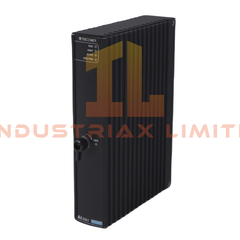
Yokogawa S9129FA CENTUM CS Series
The Yokogawa S9129FA, also cataloged as the S9400UK Battery Pack, operates as a dedicated hardware component for memory and real-time clock power backup within CENTUM CS 1000, CENTUM CS 3000, and VFD10D platforms. It maintains internal static RAM configuration data and system clock synchronization during main supply voltage interruptions.
Hardware Specifications
Parameter
Specification
Model
S9129FA (Alternative Part: S9400UK)
Brand
Yokogawa Electric Corporation
Origin
Japan
Battery Chemistry
Nickel-Metal Hydride (Ni-MH)
Nominal Voltage
2.4 VDC
Nominal Capacity
1100 mAh
Operating Temp
-20 to +70 degC
Weight
0.3 kg
Dimensions
51 mm x 29 mm x 14.5 mm (2.01 in x 1.13 in x 0.57 in)
Connection Type
Wire leads with keyed industrial connector
HS Code
8538900000
Power Consumption
Charging circuit draw variable based on host system backplane
Channel Isolation and Loop Integration
In distributed process control systems, the continuity of cold junction compensation (CJC) coefficients, channel-to-channel isolation parameters, and 4-20 mA HART loop protocol configurations relies directly on volatile memory stability. The S9129FA provides continuous energy to the volatile storage sectors that hold these calibrated channel offsets. When main hardware frames experience localized power disruption, this backup unit guarantees that zero-point calibrations and loop addresses are preserved, preventing the loss of historical loop synchronization parameters upon system re-initialization.
Frequently Asked Questions
Q: Can this battery pack be hot-swapped while the DCS module is unpowered?
A: No. Replacing the battery pack while the primary power supply to the module is off will result in the immediate loss of all stored SRAM configurations, calibration matrices, and real-time clock data. The module must be energized via the system backplane during battery replacement to maintain data integrity.
Q: How does ambient operating temperature impact the service life of this assembly?
A: While rated for operations up to +70 degC within industrial enclosures, continuous exposure to elevated temperatures accelerates the internal self-discharge rate and shortens overall cell longevity. For optimal service life approaching the 10-year design limit, cabinet temperatures should be regulated within standard control room tolerances.
Field Installation Guidelines
Verify that the host DCS module is receiving stable primary power from the system backplane before disconnecting the depleted battery pack.
Align the keyed localized industrial connector precisely with the module header pins to prevent terminal short circuits or reverse polarity insertion.
Ensure the wire leads are routed clear of module edges and latching mechanisms to avoid physical insulation pinching or mechanical shearing during module re-insertion into the chassis slot.
Dispose of the spent Nickel-Metal Hydride assembly according to local industrial chemical waste regulations and site safety protocols.