Available on working days between 9:00 am to 6:00 pm
Email us: sales2@industriaxplc.com
Available 24/7 for inquiries and support
Description
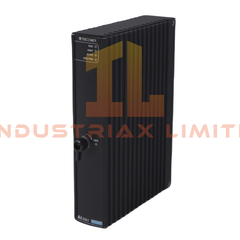
Yokogawa AMM31T RTD Input Multiplexer Module
The Yokogawa AMM31T also cataloged as the AMM31T RTD Input Multiplexer Module, operates as a dedicated hardware component for resistance temperature detector signal acquisition within Yokogawa CENTUM CS and CENTUM VP I/O subsystems.
Configured for multi-channel RTD resistance measurement in Yokogawa distributed control architectures, the Yokogawa AMM31T (AMM31T RTD Input Multiplexer Module) provides direct electrical scanning and multiplexing of field RTD inputs into a unified backplane data stream.
Suffix Breakdown & Model Matrix
AMM31T: Fixed model designation. No published suffix segmentation or option code structure is defined in available module-level documentation. All functional variation is handled at system configuration and I/O assignment level within CENTUM engineering tools.
Hardware Specifications
Parameter
Specification
ModelBrand
Yokogawa AMM31T
Origin
Japan
OperatingTemp
-10 degC to +55 degC (system module rating)
PowerConsumption
Supplied via I/O backplane (value not specified)
Input Channels
16 RTD channels
Supported Sensors
Pt100, Pt1000 class RTD elements
Wiring Mode
3-wire / 4-wire RTD configurations
Measurement Range
-200 degC to +600 degC (sensor dependent)
Isolation
Channel or group isolation (system dependent)
Update Method
Multiplexed sequential scanning
Channel-to-Channel Isolation and RTD Linearization Handling
The AMM31T implements RTD signal acquisition through time-division multiplexing across 16 input channels. Each channel undergoes resistance-to-temperature conversion with internal linearization tables executed at module or node processing level. Channel grouping isolation is applied to reduce inter-channel coupling effects under high-density RTD termination conditions.
Integration within CENTUM I/O nodes supports continuous scan scheduling aligned with backplane communication cycles, where each RTD channel is periodically sampled and converted into normalized engineering values prior to transmission to the control processor.
Frequently Asked Questions
Q: Does the AMM31T support hot-swap insertion during active RTD measurement cycles? A: Hot-swap capability is determined by the I/O rack architecture. During insertion or removal, channel scan interruption and temporary invalid data flags may be generated at the node level.
Q: How is lead-wire resistance compensated in 3-wire RTD configurations? A: Compensation is handled through differential measurement across excitation and return paths, with correction applied during resistance calculation within the module processing stage.
Q: What is the effect of multiplexing on per-channel update latency? A: Channel update latency is dependent on full scan cycle time across all active RTD inputs, resulting in sequential sampling delays across the 16-channel matrix.
Field Installation Guidelines
Shielded RTD cables shall be grounded at a single termination point, typically at the cabinet entry side to avoid ground loop formation. Twisted-pair routing is required for each RTD channel to maintain measurement integrity under industrial noise conditions.
Module seating into the CENTUM I/O rack shall be performed with backplane alignment verification prior to full insertion force application. Terminal torque values must follow cabinet-level wiring standards specified by the system integrator. Separation between power wiring and low-level RTD signal wiring shall be maintained along full routing paths to minimize induced noise coupling.