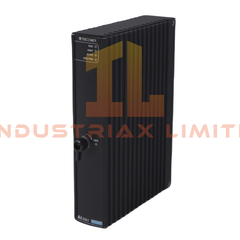
Yokogawa NFDR541-P00 Relay Output Module The Yokogawa NFDR541-P00 serves as the primary NFDR541-P00 Relay Output Module utilized to execute discrete...
Read more
Available on working days between 9:00 am to 6:00 pm
Email us: sales2@industriaxplc.com
Available 24/7 for inquiries and support
Description
Yokogawa NFDR541-P00 Relay Output Module
The Yokogawa NFDR541-P00 serves as the primary NFDR541-P00 Relay Output Module utilized to execute discrete on/off field actuation across STARDOM FCN/FCJ control platforms. Configured for digital switching of external loads, the Yokogawa NFDR541-P00 provides direct electrical relay contact execution via 16 independent dry-contact output channels.
SuffixBreakdown & Model Matrix
Model designation NFDR541-P00 does not include formally published sub-variant segmentation within this input dataset. No additional suffix decoding is applied beyond the base ordering code -P00, which identifies the module revision level.
Within Yokogawa STARDOM I/O architecture, the NFDR541-P00 implements galvanically isolated relay stages separating field output domains from internal system logic rails. The module supports 2000 VAC dielectric strength between output groups and system backplane, reducing susceptibility to cross-channel electrical coupling during mixed AC/DC switching configurations. Relay contact segmentation ensures independent load switching per channel without shared electronic drive coupling, maintaining deterministic output state integrity under FCN/FCJ scan execution cycles.
Frequently Asked Questions
Q: Can the NFDR541-P00 outputs be hot-swapped under load conditions? A: The relay outputs are not intended for live load insertion or removal. External load de-energization is required prior to module extraction to avoid contact arcing and backplane transient stress.
Q: What is the limitation of backplane current consumption? A: The module draws 780 mA at 5 VDC from the system power rail. Backplane supply capacity must accommodate cumulative I/O module loading within FCN/FCJ node configuration limits.
Q: Does each channel operate independently in isolation? A: Each relay channel is electrically isolated at the contact stage; however, power supply and logic control originate from shared system architecture within the STARDOM node.
Field Installation Guidelines
The module shall be installed on DIN rail or panel mount structures with verified mechanical locking engagement. Pressure clamp terminals must be tightened according to standard industrial torque practices to ensure stable contact resistance. Field wiring for AC loads sharing a common terminal must maintain identical phase reference to prevent inter-channel short circuit conditions. For inductive DC loads, external flyback suppression components are required to limit contact voltage stress during coil de-energization events.
Signal cables should be routed with separation from high-frequency or high-voltage conductors to minimize electromagnetic coupling. Shield grounding shall be performed at a single reference point to avoid ground loop formation across STARDOM I/O assemblies.