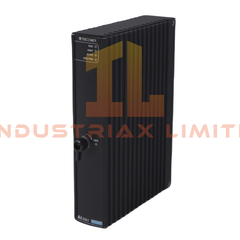
Description
Product Overview
The General Electric DS200SLCCG1ACC belongs to the Multilin series and functions as a LAN communication card for DCS systems. Engineers rely on this module to manage turbine control signals and communication efficiently. Its compact design, measuring 18.8 × 14.2 × 2 cm and weighing 0.24 kg, ensures easy installation and reliable performance in demanding industrial environments.
Technical Specifications
| Parameter |
Specification |
| Model Number |
DS200SLCCG1ACC |
| Module Type |
Thermocouple Termination Module |
| Manufacturer |
GE |
| Series |
Multilin |
| System |
DCS |
| Dimensions |
18.8 × 14.2 × 2 cm |
| Weight |
0.24 kg |
| HS Code |
8537101190 |
| Condition |
Brand New |
| Origin |
USA |
| Lead Time |
In Stock |
| MOQ |
1 |
| Status |
Active |
| Communication Service |
Ethernet router |
| Terminal Blocks |
Two 90-pin blocks (TB1, TB2) |
| Connectors |
Three 20-pin connectors |
| Signal Capacity |
Up to 180 signal wires |
Functional Highlights
The GE DS200SLCCG1ACC integrates two 90-pin terminal blocks, allowing connection of up to 180 signal wires. Engineers use three 20-pin connectors to enhance compatibility with turbine control systems. Unlike other modules, the DS200SLCCG1ACC eliminates the need for manual jumpers, relying instead on specialized connectors for efficient integration.
Its durable design ensures long-term reliability in turbine supervisory applications. Operators benefit from simplified installation and reduced maintenance, making this module a practical solution for legacy Mark V systems.
Applications and Compatibility
The General Electric DS200SLCCG1ACC supports turbine control systems within the Speedtronic Mark V series, including wind, steam, and gas turbines. Its compatibility with legacy GE infrastructure ensures smooth integration and reliable operation.
Operators deploy the DS200SLCCG1ACC in energy generation, industrial automation, and turbine management environments where precise communication and signal termination are critical. Its robust construction and efficient design make it a valuable component for maintaining and servicing Mark V systems.