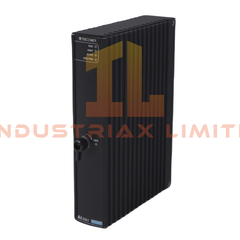
Description
Product Overview
The IS210MVRBH1A I/O Interface Board from General Electric belongs to the EX2100 Mark VIe Series. This module weighs 0.46 kg and measures 27.8 x 21.2 x 3.5 cm, offering reliable integration into turbine control and automation systems. Engineers value its high-accuracy temperature sensor, independent IONet communication, and compatibility with analog and digital signals.
Technical Specifications
| Parameter |
Value |
| Model Number |
IS210MVRBH1A |
| Module Type |
I/O Interface Board |
| Manufacturer |
GE |
| Product Range |
EX2100 / Mark VIe |
| Condition |
Brand New |
| Weight |
0.46 kg |
| Dimensions |
27.8 x 21.2 x 3.5 cm |
| HS Code |
8537101190 |
| Minimum Order Quantity |
1 |
| Origin |
USA |
| System |
DCS |
| Status |
Active |
| Communication Service |
Ethernet router |
| Temperature Sensor |
±2°C accuracy |
| Interfaces |
IONet, Unit Data Highway (UDH) |
| Signal Handling |
R/S/T ADIO (Analog/Digital I/O) |
| Expansion |
Compatible with PMVE I/O pack |
| Connectors |
Modular design for easy installation |
Functional Description
The IS210MVRBH1A board enhances turbine control systems by facilitating seamless data exchange and monitoring. Engineers benefit from its ±2°C high-accuracy temperature sensor, which continuously tracks system conditions and generates diagnostic alarms when thresholds are exceeded. Logged data remains accessible for analysis and optimization.
Independent IONet communication allows I/O pack replacements without disrupting other components or removing field wiring. The board processes both analog and digital signals efficiently, ensuring coordinated operation across the Mark VIe system. When paired with the PMVE I/O pack, the IS210MVRBH1A expands input and output capacity, managing a wide range of sensors and actuators.
Applications and Compatibility
The IS210MVRBH1A I/O Interface Board suits turbine excitation systems, industrial automation, and safety-critical monitoring networks. It integrates seamlessly with GE Speedtronic EX2100 and Mark VIe assemblies, ensuring compatibility across diverse environments. Engineers deploy it in power generation plants, heavy industry, and automation networks where precise monitoring, reliable communication, and modular expansion are essential.