Description
Product Overview
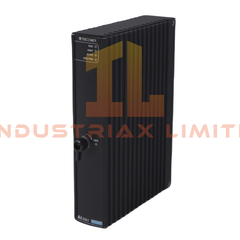
The IC693MDL741 from GE Fanuc (now Emerson Automation) is a Series 90-30 discrete DC output module engineered for industrial control systems. Designed for negative logic operation, it delivers reliable switching for low-to-medium power devices, offering 16 independent output points divided into two 8-point groups. Its robust construction ensures stable performance in continuous operation environments.
Technical Specifications
| Feature |
Specification |
| Model |
IC693MDL741 |
| Series |
Series 90-30 PLC |
| Module Type |
DC Output Module (Negative Logic) |
| Output Points |
16 points (2 x 8-point groups) |
| Output Voltage |
12–24 VDC |
| Output Current per Point |
0.5 A |
| Max Current per Common |
2 A |
| Module Current Draw |
110 mA with all outputs energized |
| Logic Type |
Negative logic (sinks current from load to common) |
| Wiring Connection |
Load connected between positive power bus and module output |
| Isolation |
Outputs grouped with common terminals |
| Weight |
0.45 lbs |
Key Features
-
Negative Logic Operation: Sinks current from the connected load to the common terminal, suitable for standard sinking loads.
-
Compact 16-Point Design: Two 8-point output groups simplify wiring and allow modular expansion.
-
Industrial Reliability: Built for continuous operation in demanding environments.
-
Versatile Control: Drives solenoids, relays, contactors, and indicator lamps efficiently.
Applications
Ideal for factory automation, process control, and machinery where reliable discrete DC outputs are required. Frequently used in systems for operating solenoids, relays, small contactors, and status indicator lamps.
Practical Considerations
-
Ensure connected devices are compatible with sinking (negative logic) outputs.
-
Maximum 0.5 A per point; for higher current devices, use external relays or contactors.
-
Each 8-point group shares a common terminal; plan wiring accordingly.
FAQ
Q: Can this module handle inductive loads like solenoids?
A: Yes, but ensure that the load current does not exceed 0.5 A per point and include appropriate flyback diodes if necessary.
Q: How does negative logic differ from positive logic modules?
A: Negative logic modules sink current from the load to the common, whereas positive logic modules source current to the load.
Q: Are there higher current versions of this module?
A: Yes, GE Fanuc offers modules with higher per-point current ratings or relay interface modules for larger loads.