Description
Overview
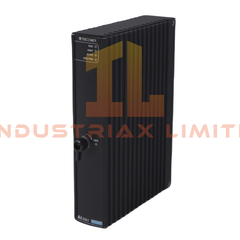
The GE DS200TCDAG1BFD Digital I/O Board is a critical module within the Mark V Turbine Control System. Engineers use this board to manage input and output signals with precision, supported by integrated microprocessors and PROM modules. Its compact design, diagnostic LEDs, and multiple connectors ensure reliable performance in demanding industrial environments.
Technical Specifications
| Parameter |
Value |
| Model Number |
DS200TCDAG1BFD |
| Module Type |
Digital I/O Board |
| Manufacturer |
GE |
| Product Range |
Mark VIE |
| Condition |
Brand New |
| Lead Time |
In Stock |
| Weight |
0.3 kg |
| Dimensions |
27.8 x 21.2 x 2 cm |
| HS Code |
8537101190 |
| Minimum Order Quantity |
1 |
| Origin |
USA |
| System |
DCS |
| Status |
Active |
| Communication Service |
Ethernet router |
| Connectors |
2 x 50-pin, JX1 and JX2 |
| LEDs |
10 block LEDs, 1 side-mounted |
| Jumpers |
8 |
| Processor |
Integrated microprocessor |
| Memory |
PROM modules |
Functional Description
The GE DS200TCDAG1BFD integrates a microprocessor and PROM modules to manage turbine control signals effectively. Engineers benefit from 10 diagnostic LEDs and a side-mounted LED that provide clear visual monitoring. Two 50-pin connectors link to ribbon cables, each carrying 50 insulated signals, ensuring accurate communication between system components.
The JX1 and JX2 connectors function identically, offering flexibility in installation. Eight jumpers allow configuration adjustments, while the board’s B-rated revision reflects performance improvements over earlier versions. The GE DS200TCDAG1BFD remains a reliable solution for excitation control within EX2100 systems.
Applications and Compatibility
The GE DS200TCDAG1BFD Digital I/O Board suits turbine control systems requiring precise signal management and diagnostic clarity. It integrates seamlessly with Mark V and EX2100 excitation control systems. Typical applications include gas turbine monitoring, steam turbine automation, and advanced DCS environments where durability and efficient communication are essential.