Description
Product Overview
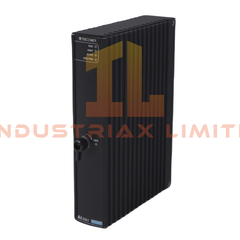
The DS200DTBDG1ABB Contact Output Expansion Termination Module from General Electric belongs to the Mark VIe Series. This PCB weighs 1.4 kg and measures 27.8 x 21.2 x 4.8 cm, making it suitable for turbine control systems. Engineers value its large terminal capacity, multiple connectors, and durable protective coating for reliable performance in demanding environments.
Technical Specifications
| Parameter |
Value |
| Model Number |
DS200DTBDG1ABB |
| Module Type |
Contact Output Expansion Termination Module |
| Manufacturer |
GE |
| Product Range |
Mark VIe / Mark V legacy |
| Condition |
Brand New |
| Weight |
1.4 kg |
| Dimensions |
27.8 x 21.2 x 4.8 cm |
| HS Code |
8537101190 |
| Minimum Order Quantity |
1 |
| Origin |
USA |
| System |
DCS |
| Status |
Active |
| Communication Service |
Ethernet router |
| Terminal Blocks |
Two, each with 107 terminals |
| Connectors |
Three 34-pin, three 40-pin |
| Jumpers |
Two adjustable |
| Test Points |
Multiple for diagnostics |
| Components |
Rectifiers, diodes, capacitors |
| PCB Coating |
Thick protective layer |
Functional Description
The DS200DTBDG1ABB module extends the control capabilities of GE’s Mark V turbine systems. Engineers benefit from two terminal blocks containing 107 terminals each, enabling secure and organized wiring. Three 34-pin and three 40-pin connectors provide versatile interfacing options, while multiple test points simplify diagnostics.
Voltage-limiting functions are reinforced by rectifiers, diodes, and capacitors integrated into the board. A thick protective coating ensures durability in harsh industrial environments. The DS200DTBDG1ABB represents a three-fold revision of the DS200DTBDG1 parent module, offering improved functionality and reliability.
Applications and Compatibility
The DS200DTBDG1ABB Contact Output Expansion Termination Module suits wind, gas, and steam turbine systems requiring extended output capacity. It integrates seamlessly with GE Speedtronic Mark V and Mark VIe assemblies, ensuring compatibility across diverse industrial environments. Engineers deploy it in power generation plants, heavy industry, and automation networks where high terminal density and robust performance are essential.