Available on working days between 9:00 am to 6:00 pm
Email us: sales2@industriaxplc.com
Available 24/7 for inquiries and support
Description
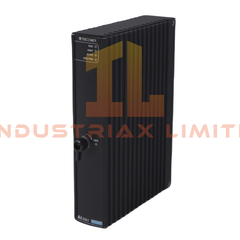
Yokogawa SB401-11 S1 ESB Bus Interface Master Module
The Yokogawa SB401-11 S1 also cataloged as the SB401 ESB Bus Interface Master Module, operates as a dedicated hardware component for deterministic ESB backplane communication within CENTUM CS / CENTUM VP systems. It executes synchronized data exchange across ESB-connected nodes and manages inter-module bus arbitration at controller level.
Suffix Breakdown & Model Matrix
SB401: Base ESB bus interface module series identifier
-11: Hardware / specification revision code within SB401 family
S1: Style designation indicating mechanical and design iteration level No functional expansion beyond ESB master interface role is defined by suffix alone.
Hardware Specifications
Parameter
Specification
ModelBrand
Yokogawa SB401-11 S1
Origin
Japan
Weight
Approx. 0.2 kg to 0.3 kg
Dimensions
Approx. 32.8 x 130 x 142.5 mm
OperatingTemp
Not specified (system dependent CENTUM rack environment)
PowerConsumption
Approx. 0.5 A (via backplane supply)
Communication Type
ESB (Enhanced Serial Bus)
Data Rate
Up to 128 Mbps
Network Nodes
Up to 9 ESB-connected units
Redundancy
Dual ESB bus configuration supported
Cable Distance
Up to 10 m standard; extended via optical repeater modules
Yokogawa ESB Backplane Communication Characteristics
The SB401-11 S1 operates within a Yokogawa DCS backplane architecture where ESB frames are time-synchronized across controller and node interfaces. Channel-to-channel electrical isolation is implemented at module boundary level to reduce ground potential variation between I/O racks and controller chassis. ESB arbitration logic maintains deterministic transfer sequencing under multi-node polling conditions, preventing frame collision during simultaneous module access cycles.
Frequently Asked Questions
Q: Does SB401-11 S1 support hot-swap operation in CENTUM racks? A: Hot-swap capability depends on system rack configuration. ESB backplane signals require controlled insertion procedures to prevent bus disturbance during live operation.
Q: What is the impact of removing one ESB node on bus timing? A: Node removal forces ESB re-synchronization. Temporary frame alignment adjustment occurs across remaining nodes to maintain deterministic scheduling.
Q: Can SB401-11 S1 operate in redundant ESB topology? A: Yes. The module supports dual ESB bus paths, allowing automatic path switching under communication line degradation conditions.
Field Installation Guidelines
Ensure system power isolation before inserting or removing the SB401-11 S1 module from the CENTUM rack backplane. Maintain correct alignment with ESB connector rails to avoid bent pin conditions. Shielded backplane grounding must be verified at cabinet level to maintain signal integrity under high-speed ESB operation. Cable routing for ESB interconnects should follow separated trunking paths to minimize electromagnetic coupling with power conductors.
Avoid mechanical stress on the module edge connector during installation, and confirm full seating before re-energizing the system. Redundant ESB configurations require matched cabling lengths to maintain timing symmetry between primary and secondary communication paths.