Available on working days between 9:00 am to 6:00 pm
Email us: sales2@industriaxplc.com
Available 24/7 for inquiries and support
Description
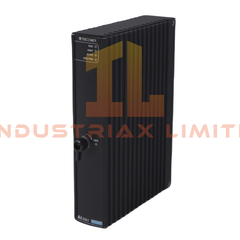
Yokogawa SEC402-51 ESB Bus Coupler Module
Configured for ESB bus data exchange between safety control units and safety node units in ProSafe-RS safety system architectures, the Yokogawa SEC402-51 (SEC402 ESB Bus Coupler Module) provides direct physical backplane-to-field node communication via dual ESB bus interfaces mounted on dedicated controller slots.
The module operates as a dual-port ESB bus master interface, managing cyclic I/O data transmission between safety control unit S2SC70£ / SSC60£ and distributed safety node units through upper and lower ESB trunk segments.
Hardware Specifications
Parameter
Specification
ModelBrand
Yokogawa SEC402-51
Origin
Japan
Weight
Approx. 0.24 kg
PowerConsumption
0.5 A
Core Function
ESB Bus Coupler / ESB bus master interface
Transmission Speed
128 Mbps (I/O data transmission)
Max Node Capacity
Up to 9 units per upper/lower side (standard), up to 12 with star connection (R4.04 or later)
Transmission Distance
Max 10 m per ESB bus segment
Mounting Position
Slots 7 and 8 of safety control unit
ESB Bus Architecture Characteristics (Yokogawa Safety Network Layer)
Yokogawa ESB bus architecture implements deterministic cyclic data transfer between safety controller backplane and distributed node I/O units using dual-channel ESB segmentation (upper/lower bus paths). The SEC402-51 functions as the physical bus master, scheduling frame-level synchronization and enforcing node scan consistency across safety I/O modules such as SNB10D and SNT4££ series.
The ESB communication layer is engineered for fixed-cycle deterministic exchange, with separation of upper and lower bus domains to reduce cross-segment traffic coupling. In star topology mode (S2SC70S / S2SC70D with R4.04+), node expansion logic extends to 12 units per segment, requiring strict adherence to ESB cable length constraints and termination impedance matching across distributed node branches.
Frequently Asked Questions
Q: Can the SEC402-51 operate in hot-swap conditions? A: Module replacement is not intended under energized ESB bus conditions. Bus synchronization requires controller-level reinitialization after physical replacement.
Q: What limits ESB bus node expansion per segment? A: Node count is constrained by ESB master scan cycle timing and electrical loading. Standard configuration supports 9 nodes per side; extended star topology supports up to 12 nodes with firmware R4.04 or later.
Q: Does the module isolate upper and lower ESB bus domains? A: Upper and lower ESB ports operate as logically separated bus channels, but share synchronized scan timing under a single ESB master scheduling mechanism.
Field Installation Guidelines
ESB Bus Coupler Modules shall be installed only in slot positions 7 and 8 of the designated safety control unit chassis. Ensure correct alignment of ESB backplane connectors prior to insertion to avoid signal misalignment on high-speed bus lanes.
ESB cable routing must maintain separation between upper and lower bus segments. Cable length must not exceed 10 m per segment. Shield termination shall be grounded at one end only to prevent ground loop current injection into the bus reference plane.
Avoid mechanical stress on ESB connectors during installation. Ensure all node units are powered down or placed in maintenance mode before coupling or decoupling ESB trunk lines.