Available on working days between 9:00 am to 6:00 pm
Email us: sales2@industriaxplc.com
Available 24/7 for inquiries and support
Description
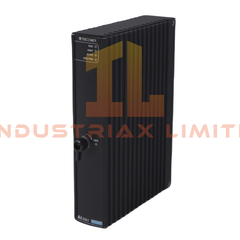
Yokogawa EB501-10 S2 Bus Interface Module
The Yokogawa EB501-10 S2 serves as the primary EB501-10 S2 Bus Interface Module utilized to execute deterministic ER Bus slave communication across Yokogawa CENTUM CS and CENTUM VP control system I/O node architectures.
Configured for real-time I/O node data exchange in CENTUM VP distributed control topology, the Yokogawa EB501-10 S2 (EB501-10 S2 Bus Interface Module) provides direct electrical and protocol-level execution between remote node racks and Field Control Unit (FCU) master interfaces via ER Bus linkage.
Suffix Breakdown & Model Matrix
Base Model: EB501-10
Hardware Revision: S2
Functional Class: ER Bus Slave Interface Module
System Role: Remote I/O node communication interface
Powered via rack backplane (approx. 24 VDC system supply)
Communication Type
ER Bus slave interface
Data Link
Coaxial bus connection (BNC interface)
Transfer Rate
10 Mbps fixed
Yokogawa DCS Communication Bus Characteristics
The EB501-10 S2 implements ER Bus deterministic signaling within Yokogawa CENTUM architectures, enabling cyclic process data exchange between Field Control Unit (FCU) master processing layers and distributed I/O nodes. The communication stack is aligned with Yokogawa DCS field integration behavior, supporting channelized process variable propagation and control command return paths. Typical Yokogawa process control architectures may also interface higher-level modules through FOUNDATION Fieldbus or Profibus PA segments at supervisory layers, while the EB501 remains dedicated to backplane-to-node transport segregation within the ER Bus domain.
Frequently Asked Questions
Q: Can the EB501-10 S2 be hot-swapped during operation? A: Hot-swap is not supported under active ER Bus communication load. System shutdown or node isolation is required before module removal.
Q: What is the impact of backplane power fluctuation on the module? A: The module operates on stabilized rack backplane supply. Voltage instability may interrupt ER Bus synchronization and cause communication reinitialization cycles.
Q: Does the module support redundant ER Bus configurations? A: Redundant configuration depends on FCU architecture and paired master-slave slot arrangement. The EB501-10 S2 itself operates as a slave node interface.
Field Installation Guidelines
Ensure ER Bus coaxial cabling is terminated using approved BNC connectors with controlled impedance routing. Maintain separation between signal cabling and high-voltage conductors to reduce induced noise on the 10 Mbps bus line. The module must be fully seated into the I/O node backplane connector to guarantee stable clock and data alignment. Grounding of the rack chassis shall follow Yokogawa cabinet grounding standards to maintain signal reference integrity across distributed node segments. Avoid insertion or removal under energized conditions unless system design explicitly supports maintenance isolation mode.