Description
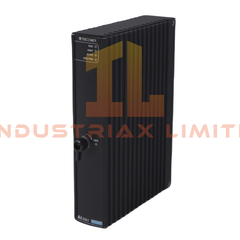
Yokogawa SDV541-S53 Digital Output Module
Configured for discrete signal actuation in DCS-based output sub-systems, the Yokogawa SDV541-S53 (SDV541-S53 Digital Output Module) provides direct physical/electrical execution for 24 V DC switching control within distributed control I/O architectures.
The module implements a 16-channel digital output structure with internal channel-to-channel isolation, supporting control signal distribution to field actuators via 24 V DC output drivers. Electrical separation between logic and field interface is maintained to reduce cross-channel interference in dense I/O mounting environments.
Suffix Breakdown & Model Matrix
-
S: Standard type construction
-
5: Terminal block or MIL cable interface configuration, no explosion protection rating
-
3: ISA Standard G3 environmental class compliance, operating temperature range -20 degC to 70 degC
Hardware Specifications
| Parameter |
Specification |
| ModelBrand |
Yokogawa SDV541-S53 |
| Origin |
Not specified |
| Weight |
0.3 kg |
| Dimensions |
Not specified |
| OperatingTemp |
-20 to 70 degC (ISA G3 class) |
| PowerConsumption |
300 mA max (5 V DC), 150 mA max (24 V DC) |
| Output Channels |
16-channel digital output |
| Output Voltage |
24 V DC |
| Isolation |
Channel-to-channel isolated output structure |
Channel Isolation & DCS Output Architecture (Yokogawa Process Control Binding)
The SDV541-S53 is designed under Yokogawa distributed control system I/O philosophy, implementing channel-to-channel electrical isolation to mitigate signal coupling between adjacent output drivers. In modular DCS racks, this architecture supports stable switching integrity when multiple 24 V DC loads are driven simultaneously. The output stage is structured to maintain separation between field wiring potential and internal logic reference, aligning with standard process I/O segmentation practices used in Yokogawa control platforms.
Frequently Asked Questions
Q: Can the SDV541-S53 outputs be hot-swapped during operation?
A: Hot-swap capability depends on the specific I/O base and system configuration. Electrical load terminals must be de-energized prior to module removal to prevent backfeed through output drivers.
Q: Does channel-to-channel isolation eliminate the need for external interposing relays?
A: No. Isolation reduces internal cross-channel coupling but does not replace external load protection devices such as relays, surge suppression, or flyback diodes for inductive loads.
Q: What is the impact of maximum current consumption on rack backplane loading?
A: The module draws up to 300 mA at 5 V DC and 150 mA at 24 V DC, which must be accounted for in total I/O node power budgeting to prevent backplane voltage droop.
Field Installation Guidelines
The module shall be installed in a compatible Yokogawa I/O rack with secure backplane engagement. Ensure all field wiring is terminated using the specified pressure clamp or MIL cable interface, depending on suffix configuration. Maintain proper segregation between signal and power wiring to minimize electromagnetic coupling. Shielded cables shall be grounded at a single-point reference to avoid ground loop formation. Verify output load polarity and ensure suppression components are installed for inductive devices such as solenoids or contactor coils.