Description
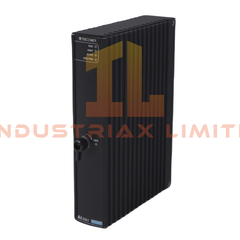
Yokogawa ADV569-P50 Digital Output Module
Configured for transistor-based digital output execution in CENTUM process control networks, the Yokogawa ADV569-P50 (ADV569 Digital Output Module) provides direct physical/electrical execution. The module supports 64 isolated output channels with current sink transistor outputs, one-shot pulse generation, and time-proportioning output control for discrete field interfacing within Yokogawa DCS architectures.
Suffix Breakdown & Model Matrix
| Item |
Description |
| ADV569 |
Base digital output module platform |
| -P50 |
Factory-defined suffix variant for CENTUM-compatible hardware configuration |
Hardware Specifications
| Parameter |
Specification |
| Model |
ADV569-P50 |
| Brand |
Yokogawa |
| Origin |
Japan |
| Product Type |
Digital Output Module |
| Number of Channels |
64 |
| Output Type |
Transistor contact (current sink) |
| Signal Isolation |
Common every 16 channels on negative side |
| Rated Load Voltage |
30 VDC |
| Maximum Load Current |
100 mA per channel |
| Output ON Voltage |
<= 2 VDC |
| Leakage Current (OFF) |
<= 0.1 mA |
| Output Response Time |
16 ms |
| Pulse Width Range |
8 ms to 7200 s |
| Pulse Width Resolution |
8 ms |
| Output Delay Accuracy |
Up to 1 ms ON/OFF delay |
| Supported Load Type |
Resistive and inductive loads |
| Protection Requirement |
External diode required for DC relay driving |
| Redundancy Support |
Dual redundancy supported |
| Power Consumption |
800 mA at 5 VDC |
| Weight |
Approx. 0.30 kg |
Channel Isolation and Process Signal Segmentation
The ADV569-P50 implements channel grouping isolation on the negative side for every 16 output channels. This segmentation structure reduces common return interference during simultaneous transistor switching operations inside distributed process control cabinets. The module is designed for discrete signal execution associated with process sequence timing, pulse-driven actuation, and time-proportioning output behavior within CENTUM systems.
The output circuitry supports both resistive and inductive field loads. When driving DC relay coils or inductive devices, external flyback diode protection is required to suppress reverse transient voltage across the transistor output stage.
Frequently Asked Questions
Q: Does the ADV569-P50 support redundant operation within CENTUM systems?
A: Yes. The module supports dual redundancy operation when installed within compatible Yokogawa system architectures.
Q: Can the module directly drive inductive DC relay loads?
A: Yes, but external diode suppression must be installed across relay coils to prevent reverse voltage transients during output de-energization.
Q: What output timing functions are available on the module?
A: The module supports one-shot pulse output from 8 ms to 7200 s and time-proportioning output control with up to 1 ms ON/OFF delay capability.
Field Installation Guidelines
Before installation, isolate cabinet control power and verify backplane compatibility with the designated CENTUM node configuration. Maintain separation between output wiring bundles and analog signal cabling to reduce switching noise propagation.
For inductive load wiring, install flyback suppression diodes directly at the field device terminals rather than at the marshalling cabinet whenever possible. Shield grounding should follow single-point cabinet grounding practices to avoid circulating return currents between channel groups.
Confirm load current remains below 100 mA per channel during steady-state operation. Excessive inrush current from solenoids or relay assemblies should be evaluated before field energization.