Description
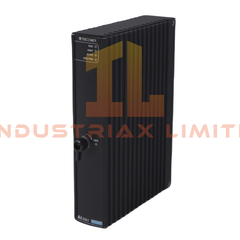
Yokogawa ADV551-P63 Digital Output Module
Configured for discrete ON/OFF field device actuation in CENTUM-style DCS I/O architectures, the Yokogawa ADV551-P63 (ADV551 Digital Output Module) provides direct electrical switching of 24 V DC current sink output channels across distributed control system backplane networks.
SuffixBreakdown & Model Matrix
No validated manufacturer breakdown for suffix "-P63" is provided in the supplied technical data. No internal segmentation is applied.
Hardware Specifications
| Parameter |
Specification |
| ModelBrand |
Yokogawa ADV551-P63 |
| Origin |
JAPAN |
| Weight |
0.4kg |
| PowerConsumption |
Backplane powered (value not specified) |
| Output Channels |
32 channels |
| Output Type |
Current sink |
| Rated Voltage |
24 V DC |
| Max Load Current |
100 mA per channel at 26.4 V DC |
| Withstanding Voltage |
2 kV AC (output to system), 500 V AC (between commons, 1 min) |
| Channel Grouping |
Common minus (-) side every 16 channels |
Yokogawa Channel-to-System Electrical Isolation Behavior
The ADV551-P63 implements grouped common return architecture with segmented 16-channel isolation domains. Channel-to-system dielectric separation is rated at 2 kV AC for 1 minute, limiting propagation of external surge transients into backplane logic circuits. The current sink topology enables direct interfacing with externally supplied 24 V DC loads, where switching is performed by internal transistor stages referenced to grouped commons rather than isolated per-channel floating outputs.
Signal integrity within dense I/O racks is maintained through internal separation between channel clusters, reducing cross-load coupling effects during simultaneous switching events in multi-point discrete control sequences typical of DCS event-driven logic execution.
Frequently Asked Questions
Q1: Can the ADV551-P63 be hot-swapped during system operation?
A1: Hot-swap capability depends on the hosting Yokogawa I/O base and system configuration. Electrically, backplane disconnection removes both logic and field power reference, so output state transitions to undefined unless system-level interlocks are enforced.
Q2: Does each channel provide galvanic isolation?
A2: The module uses grouped isolation (16-channel common groups). Individual channel-to-channel galvanic isolation is not implemented; isolation is defined between output groups and system circuitry.
Q3: What type of field load is supported by the current sink outputs?
A3: The outputs are designed for externally powered 24 V DC loads where the module provides sink-path switching up to 100 mA per channel.
Field Installation Guidelines
The module shall be installed into a compatible Yokogawa I/O rack with confirmed backplane alignment. Field wiring must maintain segregation between field power commons and system logic grounds. Shield termination shall be executed at a single-point earth reference to avoid circulating ground currents across grouped output commons.
Each output channel load circuit must include verification of external 24 V DC supply polarity prior to energization. Wire routing shall avoid parallel runs with high-frequency drive cables to reduce induced transient coupling into switching conductors.