Description
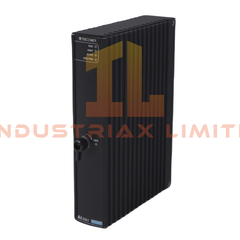
Yokogawa ADV551-P63/D5A00 Digital Output Module
Configured for 32-channel discrete signal switching in CENTUM-based process control environments, the Yokogawa ADV551-P63/D5A00 (ADV551 Digital Output Module) provides direct physical/electrical execution. The module supports current sink transistor outputs at 24 V DC with pulse width output and time-proportional output functionality integrated through suffix code P.
Suffix Breakdown & Model Matrix
| Code Segment |
Description |
| ADV551 |
Digital Output Module |
| P |
Pulse width output function/time-proportional output function |
| 6 |
Status display included; no explosion protection |
| 3 |
ISA Standard G3 option and temperature option (-20 to 70 degC) |
| D5A00 |
KS Cable Interface Adapter for 32-channel digital interface |
| ATD5A-00 |
Associated KS cable interface adapter model |
Hardware Specifications
| Parameter |
Specification |
| Model |
ADV551-P63/D5A00 |
| Brand |
Yokogawa |
| Product Type |
Digital Output Module |
| Origin |
Japan |
| Number of Channels |
32 digital output channels |
| Output Format |
Current sink |
| Rated Applied Voltage |
24 V DC |
| Maximum Load Current |
100 mA/channel at 26.4 V |
| Pulse Width Output |
Supported |
| Time-Proportional Output |
Supported |
| Isolation Withstand Voltage |
2 kV AC between output signal and system for 1 minute |
| Common-to-Common Withstand Voltage |
500 V AC for 1 minute per 16-channel common minus side |
| Operating Temp |
-20 to 70 degC |
| Status Indication |
Integrated status display |
| Explosion Protection |
Not included |
| Interface Adapter |
ATD5A-00 KS Cable Interface Adapter |
| Weight |
0.2 kg |
Channel Isolation and DCS Signal Handling
The ADV551 series operates within Yokogawa DCS architectures using isolated digital output group structures separated per 16-channel common configuration. The module is designed for direct transistor-level switching of field-connected loads while maintaining electrical separation between system-side circuitry and output-side circuits through 2 kV AC withstand isolation.
The integrated pulse width output function permits time-proportional actuation control for electrically driven field devices requiring duty-cycle modulation rather than static ON/OFF state transitions. Wiring segregation between output commons and signal routing is required to minimize inductive coupling and transient propagation across adjacent channels.
Frequently Asked Questions
Q: Does the ADV551-P63/D5A00 support hot swapping during operation?
A: Hot-swap capability is dependent on the installed Yokogawa control station architecture and I/O carrier configuration. Module insertion and removal procedures should follow the active controller maintenance sequence defined for the hosting DCS platform.
Q: What type of field loads can be connected to the module outputs?
A: The outputs are intended for 24 V DC current sink operation with a maximum load current of 100 mA per channel. External load characteristics must remain within the specified transistor switching limits.
Q: Is inter-channel isolation provided for all 32 outputs?
A: The module provides common grouping per 16-channel section. Isolation withstand ratings are specified between output signals and the system side, and between commons for each 16-channel common minus grouping.
Field Installation Guidelines
Before installation, verify that the base unit and KS cable interface adapter alignment match the designated slot assignment within the Yokogawa I/O carrier assembly. Improper connector engagement may result in intermittent output channel behavior.
Separate digital output wiring from high-energy AC power conductors and variable frequency drive motor cables to reduce conducted electrical noise into the output commons. Shielded field wiring should use single-point shield grounding at the cabinet grounding bar unless otherwise defined by the plant grounding philosophy.
During termination work, confirm output polarity orientation for current sink operation. External loads must reference the correct DC supply configuration to avoid reverse conduction or transistor damage.
Do not exceed the specified 100 mA per-channel load current. Inductive field devices such as relays and solenoids should use external suppression components to limit switching transients at output terminals.