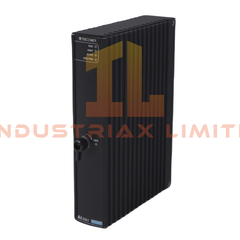
Yokogawa NFDV151-P60 Digital Input Module The Yokogawa NFDV151-P60I, also cataloged as the NFDV151-P60 Digital Input Module, operates as a dedicated...
Read more
Available on working days between 9:00 am to 6:00 pm
Email us: sales2@industriaxplc.com
Available 24/7 for inquiries and support
Description
Yokogawa NFDV151-P60 Digital Input Module
The Yokogawa NFDV151-P60I, also cataloged as the NFDV151-P60 Digital Input Module, operates as a dedicated hardware component for 32-channel 24 VDC discrete signal acquisition within Yokogawa DCS I/O subsystem.
HardwareSpecifications
Parameter
Specification
ModelBrand
Yokogawa NFDV151-P60
Origin
Yokogawa Electric Corporation
Weight
0.3 kg
PowerConsumption
500 mA at 5 VDC
Number of Input Channels
32
Rated Input Voltage
24 VDC
Input ON Voltage
18 to 26.4 VDC
Input OFF Voltage
5.0 VDC or less
Input Current
4.1 mA ±20% per channel
Max Input Voltage
30.0 VDC
Input Response Time
<= 8 ms
Max ON/OFF Cycle
25 Hz (push button input)
Withstanding Voltage
2000 VAC (input-system), 500 VAC (common)
Channel-to-Channel Signal Conditioning and Isolation Structure
The module implements fixed discrete input conditioning for 24 VDC field signals with internal threshold discrimination at ON/OFF voltage boundaries. Channel grouping architecture partitions common reference lines in 16-channel blocks, reducing cross-interference between adjacent input groups under high-density wiring conditions. Input debounce handling supports both status and push-button signal profiles, with deterministic response timing defined at the hardware level (<= 8 ms for status acquisition).
FrequentlyAskedQuestions
Q: Can the NFDV151-P60 support hot-swap replacement in energized systems? A: Hot-swap capability is determined by the backplane system design; the module itself performs passive input sampling and does not internally manage power sequencing.
Q: What is the significance of 16-channel common segmentation? A: The input commons are electrically grouped per 16 channels to reduce shared return path coupling and improve noise separation in dense field wiring layouts.
Q: Does input debounce affect push-button detection accuracy? A: Push-button mode uses a minimum ON detection window of 20 ms to suppress transient bounce and ensure stable state recognition.
FieldInstallationGuidelines
Field wiring shall maintain separation between input signal conductors and power cabling to minimize induced noise on 24 VDC discrete lines. Shield termination should be grounded at the system cabinet side only to avoid ground loop formation. Channel commons must not be bridged across separate 16-channel groups. Tightening torque and terminal engagement shall follow cabinet backplane mechanical specifications without overstressing PCB terminal blocks.