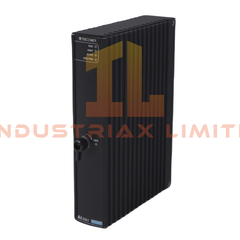
Yokogawa STB4D-00 Pressure Clamp Terminal Block The Yokogawa STB4D-00, also cataloged as the STB4D Pressure Clamp Terminal Block, operates as...
Read more
Available on working days between 9:00 am to 6:00 pm
Email us: sales2@industriaxplc.com
Available 24/7 for inquiries and support
Description
Yokogawa STB4D-00 Pressure Clamp Terminal Block
The Yokogawa STB4D-00, also cataloged as the STB4D Pressure Clamp Terminal Block, operates as a dedicated hardware component for digital I/O field termination within ProSafe-RS and CENTUM VP I/O subsystems. It provides passive electrical interface routing between field wiring and redundant digital input/output modules without signal conditioning or processing logic.
Yokogawa Electric Corporation Yokogawa
Suffix Breakdown & Model Matrix
STB4D: Base terminal block platform for digital I/O termination in redundant architectures
-00 (Suffix Code 1): No surge absorber integrated
-0 (Suffix Code 2): Fixed configuration identifier, no functional variation defined by suffix
Hardware Specifications
Parameter
Specification
Model
STB4D-00
Brand
Yokogawa
Origin
Japan
Weight
0.4 kg
Dimensions
Not specified
OperatingTemp
-20 degC to +70 degC
PowerConsumption
Passive device (no internal consumption)
Product Type
Pressure Clamp Terminal Block
Channel Capacity
8-channel / 16-channel dependent on I/O base configuration
Wiring Method
Pressure clamp termination
Surge Protection
Not included (suffix -00)
System Compatibility
ProSafe-RS, CENTUM VP
Application
Digital I/O field termination (redundant configuration)
Process Control Interface Characteristics
Channel Termination Architecture and Field Signal Routing
The STB4D-00 is implemented as a passive termination stage in Yokogawa DCS I/O cabinets. It provides point-to-point routing for discrete signals into system I/O modules, where electrical segregation is defined at the system backplane and I/O module level rather than within the terminal block assembly itself. The structure supports wiring density optimization for multi-channel digital signal bundles in redundant controller architectures.
Channel-to-channel separation is mechanically defined through terminal spacing and wiring layout discipline. Signal integrity is dependent on external shielding practices, cabinet grounding topology, and I/O module isolation design rather than internal electronics.
Frequently Asked Questions
Q: Does the STB4D-00 support hot-swap operation? A: The terminal block is passive. Hot-swap capability is determined by the connected I/O module and system backplane, not the terminal block itself.
Q: Is any internal signal conditioning or isolation implemented? A: No active circuitry is present. Electrical separation is provided by external system I/O module architecture and cabinet wiring design.
Q: Can surge protection be added internally? A: This variant (-00) does not include surge absorbers. External protection devices must be implemented at system or marshalling level if required.
Field Installation Guidelines
Ensure all field wiring is isolated from power circuits before termination
Maintain consistent shield grounding strategy at cabinet entry point only
Observe minimum bending radius for multi-core digital signal cables to avoid conductor stress
Verify terminal torque or pressure clamp engagement per cabinet wiring specification
Keep redundant channel pairs physically separated within marshalling layout to reduce coupling effects
Confirm continuity and insulation resistance prior to energizing I/O subsystem