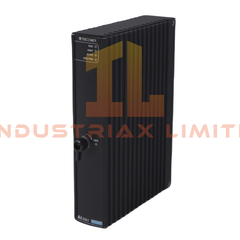
Yokogawa AAM11 Current/Voltage Analog Input Module Configured for current and voltage signal acquisition in CENTUM CS, CENTUM CS 3000, and...
Read more
Available on working days between 9:00 am to 6:00 pm
Email us: sales2@industriaxplc.com
Available 24/7 for inquiries and support
Description
Yokogawa AAM11 Current/Voltage Analog Input Module
Configured for current and voltage signal acquisition in CENTUM CS, CENTUM CS 3000, and early CENTUM VP platforms, the Yokogawa AAM11-S1 (AAM11 Current/Voltage Analog Input Module) provides direct electrical interface processing for 0-10 VDC and 4-20 mA field instrumentation channels with integrated transmitter loop power distribution.
Suffix Breakdown & Model Matrix
Model
Description
AAM11
Standard current/voltage analog input module
AAM11-S1
Revision variant with specified component/coating modification
Hardware Specifications
Parameter
Specification
Origin
Japan
Supported Systems
CENTUM CS, CENTUM CS 3000, early CENTUM VP
Input Signal Types
0-10 VDC, 0-20 mA DC, 4-20 mA DC
Allowable Voltage Input
-10 to +30 VDC
Allowable Current Input
Up to 40 mA
Input Impedance
Voltage: 1 Mohm; Current: 250 ohm
Transmitter Power Output
25.0 to 25.5 VDC
Maximum Loop Output Current
60 mA
Data Update Interval
50 ms
Accuracy Rating
Voltage: +/- 4 mV; Current: +/- 16 uA
Sampling Method
Simultaneous analog acquisition
Isolation Strength
1500 VAC for 1 minute
Channel Isolation
Galvanic isolation between field and system circuits
Operating Temp
Refer to system cabinet environmental specification
Power Consumption
300 mA maximum at 5.0 VDC
Ambient Temperature Effect
Voltage: +/- 4 mV +/- 0.15% per 10 degC; Current: +/- 32 uA per 10 degC
Mounting Method
Installed on A2BA3D I/O adaptor nest
Wiring Method
M4 screw terminals or ELCO connector
Dimensions
Approx. 17.0 x 1.0 x 6.0 cm
Weight
Approx. 0.1 kg
Channel-to-Channel Isolation Characteristics
The AAM11 module incorporates galvanic isolation between field-side analog circuitry and internal system-side processing circuits. The isolation structure is intended to reduce common-mode interference generated by ground potential differences and inductive switching devices located near field wiring routes.
For voltage acquisition channels, the module maintains high input impedance of 1 Mohm during active operation. Current input channels utilize internal 250 ohm conversion resistance for 4-20 mA and 0-20 mA process loop acquisition. Integrated transmitter excitation output of 25.0 to 25.5 VDC permits direct connection of 2-wire transmitters without external loop power hardware.
The analog acquisition cycle operates at 50 ms update intervals rather than multiplexed scan sequencing. This permits simultaneous acquisition behavior across configured input channels within the associated FCS architecture.
Frequently Asked Questions
Q: Does the AAM11 support direct 2-wire transmitter connection without an external power supply? A: Yes. The module provides integrated transmitter excitation output rated at 25.0 to 25.5 VDC with maximum output current of 60 mA for connected field loops.
Q: Is hot insertion supported while the CENTUM node remains energized? A: Hot-swap handling depends on the installed FCS generation and cabinet implementation. Field-side signal isolation does not eliminate the requirement to follow Yokogawa maintenance procedures before module replacement.
Q: What is the primary difference between multiplexed analog cards and the AAM11 acquisition method? A: The AAM11 operates using fast simultaneous acquisition with 50 ms update intervals rather than sequential multiplexed channel scanning associated with slower analog input architectures.
Field Installation Guidelines
Verify cabinet grounding continuity before installing the module onto the A2BA3D adaptor assembly.
Separate low-level analog wiring from motor drive output cables and high-current AC conductors.
Connect cable shield drain wires at the designated control cabinet grounding point only to minimize circulating ground current.
Confirm field loop polarity before applying transmitter excitation voltage to current input channels.
Use specified M4 fastening torque values according to Yokogawa cabinet assembly documentation.
Inspect ELCO connector seating alignment before energizing the associated FCS node.
Do not exceed 40 mA input current limit on analog current channels.