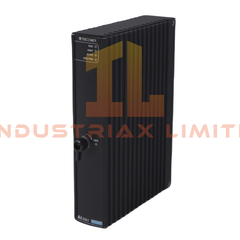
Yokogawa VF311 S1 V-NET Station Module Configured for V-NET real-time station-level communication in CENTUM CS 3000 and CENTUM VP architectures,...
Read more
Available on working days between 9:00 am to 6:00 pm
Email us: sales2@industriaxplc.com
Available 24/7 for inquiries and support
Description
Yokogawa VF311 S1 V-NET Station Module
Configured for V-NET real-time station-level communication in CENTUM CS 3000 and CENTUM VP architectures, the Yokogawa VF311 S1 (AS S9331AU-04 V-NET Station Module) provides direct physical/electrical execution for deterministic data exchange between Field Control Stations and distributed network nodes within Yokogawa V-NET systems.
The module operates as a station interface unit responsible for synchronized data transfer, network arbitration, and redundant path handling across V-NET communication segments. It is deployed as a rack-mounted communication node supporting legacy V-NET infrastructure.
Suffix Breakdown & Model Matrix
VF311 S1: Hardware revision / station interface module designation
AS S9331AU-04: Assembly / ordering reference for V-NET station module integration
V-NET Station Module: Functional classification within Yokogawa control network topology
Hardware Specifications
Parameter
Specification
ModelBrand
Yokogawa VF311 S1 / AS S9331AU-04
Origin
Japan
PowerConsumption
Approx. 20 W (module level reference class)
Core Function
V-NET station interface communication
Network Type
Yokogawa V-NET deterministic control network
Redundancy
Dual communication path support (system dependent)
Installation
Rack-mounted module format
V-NET Deterministic Communication Characteristics
The Yokogawa VF311 S1 implements V-NET synchronized communication behavior with token-based deterministic arbitration. In Yokogawa process control architectures, channel-level data exchange is managed through cyclic scheduling, ensuring that station nodes maintain predictable update timing across field control stations.
Channel communication integrity is maintained through redundancy-aware routing, where dual-path configurations allow automatic switchover upon detected line interruption. Electrical isolation and signal conditioning are handled at system backplane and network interface level depending on cabinet configuration.
Frequently Asked Questions
Q: Does the VF311 S1 support hot-swap removal during operation? A: Hot-swap capability is system-dependent and governed by the host rack backplane design. VF311 S1 itself does not define standalone hot insertion behavior.
Q: What is the typical V-NET communication behavior under redundant configuration? A: The module supports dual-path communication where one active and one standby path may be configured. Switching behavior is managed at system network arbitration level.
Q: Can the module operate in mixed V-NET and Vnet/IP environments? A: VF311 S1 is designed for V-NET architecture and does not natively function as a Vnet/IP interface node.
Field Installation Guidelines
Install module into compatible Yokogawa system rack slot only
Ensure backplane connector alignment before full insertion
Maintain shield continuity for V-NET cabling where applicable
Avoid cable routing parallel to high-voltage power lines
Verify redundancy configuration consistency at system engineering level
Perform installation with system power isolated unless rack supports insertion under power conditions