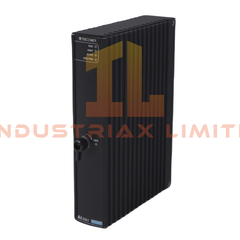
Bently Nevada 200350-02-00 Accelerometer The Bently Nevada 200350-02-00-CN, also cataloged as the 200350 Accelerometer, operates as a dedicated hardware component...
Read more
Available on working days between 9:00 am to 6:00 pm
Email us: sales2@industriaxplc.com
Available 24/7 for inquiries and support
Description
Bently Nevada 200350-02-00 Accelerometer
The Bently Nevada 200350-02-00-CN, also cataloged as the 200350 Accelerometer, operates as a dedicated hardware component for casing vibration measurement within Machinery Protection Systems (TSI). It translates physical mechanical acceleration into proportional electrical signals via its internal piezoelectric element to monitor dynamic asset conditions.
Hardware Specifications
Parameter
Specification
Model
200350-02-00
Brand
Bently Nevada
Origin
USA
Weight
0.12 kg
Dimensions
20.4 x 22.2 x 3.7 cm (Estimated Shipping Size)
Operating Temp
Standard industrial limits for accelerometer housing
Power Consumption
Determined by Constant Current Excitation
Sensitivity
100 mV/g +- 20% (10.2 mV/m/s^2 +- 20%)
Frequency Range
30 to 600,000 cpm (0.5 to 10,000 Hz)
Measurement Range
+- 50 g
Amplitude Linearity
+- 1%
Mounted Resonant Frequency
1500 kcpm (25 kHz)
Excitation Voltage
18 to 28 VDC
Constant Current Excitation
2 to 20 mA
Output Bias Voltage
8 to 12 VDC
Broadband Electrical Noise
350 ug
Mounting Stud
1/4-28 to M8 x 1.25 Stainless Steel (02 option)
Approvals
No Approvals (00 option)
Signal Cross-Talk Suppression and Rotor Dynamics
In high-speed turbo-machinery monitoring, cross-talk suppression is achieved by matching structural ground isolation with the low-noise internal electronics of the Bently Nevada 200350-02-00-CN. This ensures that high-frequency casing signals are not contaminated by adjacent magnetic fields or ground loops. Accurate tracking of rotor dynamics depends heavily on the broadband electrical noise floor remaining at or below 350 ug, which allows the monitoring system to capture sub-synchronous vibration components without false triggering.
Frequently Asked Questions
Q: What is the purpose of the 8 to 12 VDC output bias voltage?
A: The output bias voltage acts as a constant DC offset that carries the AC vibration signal. It allows the monitoring system to verify sensor integrity; if the bias voltage drops to 0 VDC or rises to the excitation level, the monitor detects an open or shorted circuit fault.
Q: How does the constant current excitation affect cable length constraints?
A: Operating with a constant current excitation between 2 to 20 mA stabilizes the high-frequency response over extended cable runs. High-capacitance cables may require higher constant current levels to maintain the upper limit of the 10,000 Hz frequency range without signal attenuation.
Field Installation Guidelines
Torque Specifications: When threading the 1/4-28 to M8 x 1.25 stainless steel stud into the casing interface, apply the manufacturer-specified torque to avoid shifting the mounted resonant frequency from its 25 kHz nominal rating.
Surface Preparation: The mounting surface must be machined flat, clean, and free from debris. Use a light coating of silicone grease or acoustic couplant between the accelerometer base and the machine casing to optimize transmission of high-frequency micro-strains.
Shielding and Grounding: Ensure the cable shield is terminated only at the monitoring rack or junction box common ground. Isolating the shield at the sensor end prevents ground loops from corrupting the dynamic 100 mV/g AC signal.