Description
Overview
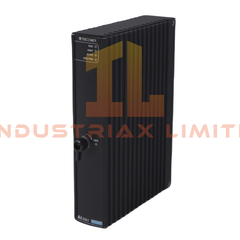
The Bently Nevada 16710-35 interconnect cable is a precision‑engineered accessory designed to support accelerometer‑based vibration monitoring in rotating machinery. Built for applications requiring accurate casing acceleration measurements—such as gear mesh analysis and fault detection—it ensures stable signal transfer between sensors and monitoring hardware.
Technical Specifications
| Parameter |
Specification |
| Model |
16710-35 |
| Product Type |
Interconnect Cable / Sensor Accessory |
| Measurement Support |
Casing acceleration, gear mesh vibration |
| Compliance |
API 670 accelerometer requirements |
| Installation |
Bearing housings or machine casings |
| Weight |
0.55 kg |
| Dimensions |
20.5 × 22.4 × 3.3 cm |
| HS Code |
8537101190 |
| Origin |
USA |
| Condition |
New |
| MOQ |
1 |
| Lead Time |
In stock |
| Status |
Active |
Functional Characteristics
The 16710-35 cable is designed to maintain high‑fidelity vibration signals, enabling early detection of mechanical issues such as unbalance, misalignment, and gear wear. Its construction supports accurate amplitude and frequency response, meeting the performance expectations defined by API 670 for accelerometer‑based monitoring.
When installed correctly on rigid machine structures, the cable ensures that transmitted signals accurately represent true casing vibration. Improper mounting can distort frequency response or introduce false readings, making correct installation essential for reliable diagnostics.
The cable’s rugged design supports long‑term use in demanding industrial environments, ensuring consistent performance in machinery protection systems.
Application Scenarios
Common use cases include:
-
Gear mesh vibration monitoring
-
Casing acceleration measurement
-
High‑sensitivity vibration detection on rotating equipment
-
API 670–compliant monitoring systems
-
Condition monitoring in power generation, refining, and heavy industry
FAQ
Q: Is the 16710‑35 suitable for API 670 applications? A: Yes. It meets API 670 requirements for accelerometer‑based monitoring.
Q: Where should this cable be installed for best performance? A: On rigid bearing housings or machine casings to ensure accurate vibration transmission.
Q: Can improper installation affect measurement accuracy? A: Yes. Incorrect mounting can reduce amplitude response or introduce misleading vibration signals.