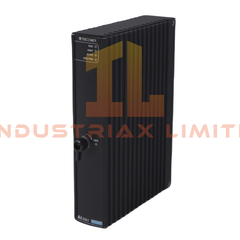
Bently Nevada 134M3942-02 Wireless Triaxial Vibration Sensor Configured for triaxial vibration acquisition and temperature signal acquisition in ISA100.11a Wireless Network,...
Read more
Configured for triaxial vibration acquisition and temperature signal acquisition in ISA100.11a Wireless Network, the Bently Nevada 134M3942-02 (134M3942-02 Wireless Triaxial Vibration Sensor) provides direct physical/electrical execution of multi-axis mechanical motion sampling and thermal transduction data transmission.
Suffix Breakdown & Model Matrix
No structured suffix decomposition is defined for 134M3942-02. The identifier is treated as a single fixed ordering code within the Ranger Pro wireless sensor family.
Hardware Specifications
Parameter
Specification
Model
134M3942-02
Brand
Bently Nevada
Origin
USA
Weight
~760 g
Dimensions
Not specified
Operating Temp
-40 deg C to +85 deg C
Power Consumption
Battery powered (industrial cell), consumption not specified
Sensor Type
Wireless triaxial vibration + temperature sensor
Measurement Axes
X, Y, Z
Communication Protocol
ISA100.11a
Ingress Protection
IP67
Mounting
Stud mount / magnetic mount
Data Security
Encrypted wireless transmission
Wireless Vibration Sampling and Signal Conditioning Characteristics
Within the Ranger Pro wireless acquisition architecture, the 134M3942-02 performs synchronous sampling across three orthogonal vibration channels. Signal conditioning includes internal scaling for velocity and acceleration domain conversion prior to wireless packetization.
Rotor dynamics representation is derived from time-domain vibration vectors, enabling imbalance and misalignment signature extraction. Channel-to-channel isolation is implemented at the sensor front-end to reduce cross-axis coupling effects under high vibration amplitude conditions. Wireless frame scheduling is aligned to ISA100.11a time-slotted communication to maintain deterministic sampling intervals under shared industrial RF spectrum conditions.
Frequently Asked Questions (FAQ)
Q: Does the module support hot-swap battery replacement during active wireless transmission? A: Battery replacement interrupts internal power rail continuity. Wireless transmission stops during removal and resumes after reinitialization and network rejoin sequence.
Q: What is the impact of packet loss in ISA100.11a communication on vibration sampling continuity? A: Missing packets are handled at gateway level. Sensor-side buffering is limited; extended RF loss results in discontinuous time-series reconstruction at the host system.
Q: Are vibration axes sampled independently or multiplexed internally? A: X, Y, and Z channels are sampled through synchronized internal acquisition logic with shared timing reference, not sequential multiplexing.
Field Installation Guidelines
Sensor mounting shall maintain rigid mechanical coupling to the machine housing using stud or magnetic base as specified. Mounting surface flatness must be sufficient to prevent micro-slippage under high-frequency vibration.
Wireless propagation path shall avoid direct obstruction from metallic enclosures or rotating assemblies. ISA100.11a network planning must ensure redundant gateway coverage for continuous data acquisition zones.
Grounding of the machine structure shall follow plant-level equipotential bonding practices. No direct electrical grounding is required at the sensor body due to isolated wireless architecture.
Battery insertion must be performed with the device powered down to prevent partial boot states or incomplete network association.