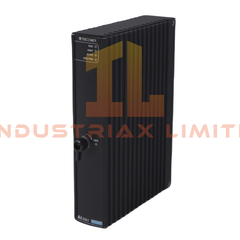
Bently Nevada 134M0389-04 Wireless Vibration Sensor Configured for continuous condition monitoring of rotating machinery in Ranger Pro Wireless Monitoring System,...
Read more
Configured for continuous condition monitoring of rotating machinery in Ranger Pro Wireless Monitoring System, the Bently Nevada 134M0389-04 (134M0389-04 Wireless Vibration Sensor) provides direct physical/electrical execution of triaxial vibration acquisition and temperature sampling through embedded sensing elements and wireless telemetry transmission.
Suffix Breakdown & Model Matrix
No officially published suffix decoding structure for 134M0389-04 is provided in available technical material. The designation is treated as a single-orderable hardware identifier within the Ranger Pro sensor family. No additional functional segmentation can be confirmed.
Triaxial accelerometer + integrated temperature sensor
Measurement Axes
X, Y, Z
Vibration Frequency Range
0.1 Hz to 20 kHz (axis dependent)
Acceleration Range
+/-1 g to +/-20 g
Wireless Protocol
ISA100.11a / WirelessHART variant dependent
Enclosure Rating
IP67
Battery Life
Up to 5 years (configuration dependent)
Bently Nevada Rotor Dynamics and Signal Integrity Characteristics
The 134M0389-04 operates within Bently Nevada rotor dynamics measurement methodology, where vibration vectors are decomposed across orthogonal axes to support shaft motion interpretation, imbalance detection, and resonance tracking. Signal processing is aligned with condition monitoring workflows that include time waveform reconstruction and spectral FFT generation at the edge or gateway level.
Cross-talk suppression is implemented at the sensor acquisition stage through internal channel isolation of the triaxial MEMS structure, reducing mechanical coupling artifacts between X, Y, and Z axes during high-frequency excitation events.
In proximity-based mechanical correlation scenarios, wireless vibration datasets may be mapped against eddy-current probe scaling references and gap voltage validation models (typically -10 VDC centered architectures in legacy systems) to align overall machine health indicators with displacement-based TSI frameworks.
Frequently Asked Questions (FAQ)
Q: Does the 134M0389-04 support simultaneous triaxial sampling and temperature acquisition? A: Yes. The device performs concurrent acquisition of X, Y, Z vibration axes and integrated temperature channel through synchronized internal sampling cycles.
Q: What is the impact of wireless duty cycle configuration on vibration resolution? A: Higher sampling frequency and shorter transmission intervals increase temporal resolution but reduce effective battery life due to increased radio and sensor wake cycles.
Q: Can the sensor data be integrated into legacy proximity probe monitoring systems? A: Integration is indirect. Data alignment is performed at the analytics layer where vibration-derived parameters may be correlated with eddy-current probe and TSI displacement datasets.
Field Installation Guidelines
Mount the sensor directly on a rigid, clean metallic surface using stud or approved mounting interface. Ensure full mechanical coupling between housing and machine structure to avoid attenuation of high-frequency vibration components.
Maintain clear line-of-sight or minimal obstruction to wireless gateways where possible to reduce packet loss in dense industrial environments. Avoid installation near high EMI sources such as VFD output cabling or high-current busbars without separation distance.
Ensure mounting surface temperature remains within specified operating range to prevent thermal bias in integrated temperature measurement channel.
Grounding is not required for signal integrity but mechanical isolation from strong galvanic corrosion interfaces is recommended.