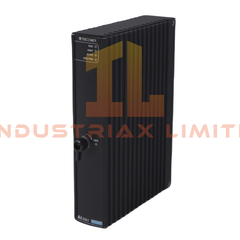
Description
Bently Nevada 125388-01 Half-Height Internal Chassis
The Bently Nevada 125388-01, also cataloged as the 125388 Half-Height Internal Chassis, operates as a dedicated hardware component for module mounting, signal routing, and backplane continuity within Bently Nevada 3500 Series machinery protection systems.
Suffix Breakdown & Model Matrix
The supplied documentation identifies a fixed catalog number configuration: 125388-01. No additional suffix matrix, slot variation, or firmware revision structure is specified in the provided material.
Hardware Specifications
| Parameter |
Specification |
| Model |
125388-01 |
| Brand |
Bently Nevada |
| Origin |
United States |
| Product Type |
Half-Height Internal Chassis |
| System Compatibility |
Bently Nevada 3500 Series |
| Compatible Modules |
3500/40, 3500/42, 3500/45 |
| Supported Sensors |
Eddy current probes, ICP accelerometers, Keyphasor sensors |
| Signal Channels |
Up to 8 isolated input channels |
| Power Supply |
24 VDC nominal |
| Input Voltage Range |
18-36 VDC |
| Power Consumption |
4.2-4.9 W |
| Frequency Response |
5 Hz-20 kHz |
| Construction |
Metal chassis with flame-retardant PCB |
| Enclosure Rating |
IP20 |
| Protection Functions |
Overvoltage, overcurrent, reverse polarity, surge protection |
| Dimensions |
22.2 cm x 24.6 cm x 2 cm |
| Weight |
0.58 kg |
| Operating Temp |
-40 deg C to +85 deg C |
| Storage Temp |
-55 deg C to +105 deg C |
| Humidity |
0-95% RH non-condensing |
| Compliance |
API 670, ISO 20816 |
Gap Voltage and Cross-Talk Suppression Characteristics
The chassis backplane structure supports low-noise signal continuity for eddy-current transducer monitoring channels used in rotor vibration and shaft position measurement loops. Internal grounding architecture and isolated channel arrangement assist in minimizing cross-talk between adjacent vibration inputs.
For systems using proximity transducers, gap voltage validation at approximately -10 VDC remains necessary during commissioning and probe alignment procedures. Improper shield termination or mixed routing with high-current conductors may introduce transient noise into Keyphasor and vibration signal paths.
The chassis mechanical structure maintains module retention stability under continuous vibration exposure associated with rotating equipment monitoring systems.
Frequently Asked Questions
Q: Does the 125388-01 contain active signal processing electronics?
A: The unit primarily functions as a chassis and backplane interface assembly supporting module installation, electrical continuity, and signal distribution within the 3500 rack structure.
Q: Can the chassis support mixed module configurations inside the same rack?
A: The provided documentation indicates compatibility with multiple 3500 Series monitoring modules including vibration and position monitoring assemblies sharing common rack infrastructure.
Q: What installation condition most affects signal integrity?
A: Shield grounding continuity, chassis bonding quality, and separation from high-energy motor cabling have direct influence on low-level vibration signal transmission stability.
Field Installation Guidelines
-
Mount the chassis on rigid grounded panel structures to reduce mechanical resonance transfer.
-
Maintain adequate airflow around installed monitoring modules.
-
Separate transducer cabling from variable frequency drive output wiring and high-current AC conductors.
-
Verify backplane connector alignment before module insertion.
-
Inspect DIN rail or panel fastening torque periodically in high-vibration environments.
-
Use single-point shield grounding practices for proximity probe extension cables.
-
Confirm rack power supply polarity before energizing the chassis assembly.