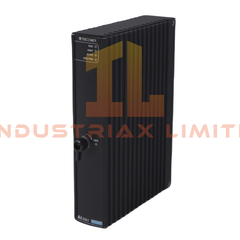
Description
Bently Nevada 107770-03-03 Velocity Transducer
Configured for mechanical vibration velocity measurement in Bently Nevada condition monitoring networks, the Bently Nevada 107770-03-03 (107770-03-03 Velocity Transducer) provides direct piezoelectric signal conversion for rotating machinery diagnostic circuits. The transducer generates proportional electrical output corresponding to casing vibration velocity for continuous monitoring of imbalance, shaft misalignment, looseness, and bearing-related mechanical behavior.
Suffix Breakdown & Model Matrix
The supplied documentation identifies the hardware as model 107770-03-03. Additional connector, cable exit, or mounting suffix variations were referenced but not defined in the provided material.
Hardware Specifications
| Parameter |
Specification |
| Model |
107770-03-03 |
| Brand |
Bently Nevada |
| Product Type |
Velocity Transducer |
| Sensing Technology |
Piezoelectric |
| Application |
Machinery vibration monitoring |
| Sensitivity |
3.94 mV/mm/s (100 mV/in/s) +/-5% |
| Velocity Range |
Up to 1270 mm/s peak |
| Frequency Response |
4.5 Hz to 5 kHz (+/-3.0 dB) |
| Secondary Frequency Response |
6 Hz to 2.5 kHz (+/-0.9 dB) |
| Amplitude Linearity |
+/-2% to 152 mm/s peak |
| Resonant Frequency |
Greater than 12 kHz |
| Shock Survivability |
5000 g peak |
| Cable Length Capability |
Up to 305 m |
| Operating Temp |
-55 deg C to +121 deg C |
| Mounting Thread |
Typically 1/2-14 NPT |
| Housing Material |
Metal alloy |
| Humidity Resistance |
Hermetically sealed |
| Weight |
950 g |
| Origin |
USA |
| Power Consumption |
Self-generating piezoelectric sensing element; no external power specified |
Rotor Dynamics and Eddy-Current Signal Correlation
The 107770-03-03 transducer operates within machinery protection architectures where rotor dynamic behavior must be correlated against vibration velocity signatures under changing shaft load conditions. Piezoelectric output stability assists in identifying imbalance vectors, mechanical looseness, bearing degradation, and resonance-related amplitude escalation.
When installed alongside eddy-current proximity probe systems, vibration velocity measurements may be cross-referenced against shaft displacement channels and gap voltage validation targets near standard -10 VDC probe bias conditions. Proper shield grounding and cable segregation practices reduce cross-talk propagation between adjacent monitoring channels during transient vibration events.
The extended cable transmission capability permits remote signal routing without significant degradation of vibration waveform fidelity under properly grounded installation conditions.
Frequently Asked Questions
Q: Does the 107770-03-03 transducer require external excitation power?
A: The provided documentation identifies the device as a piezoelectric transducer. No separate external excitation requirement was specified.
Q: What mounting interface is typically used for installation?
A: The transducer commonly uses a 1/2-14 NPT threaded mounting arrangement, depending on configuration variant.
Q: Can long cable runs affect vibration signal quality?
A: The device specification permits cable lengths up to 305 m without stated signal degradation when proper shielding and grounding practices are maintained.
Field Installation Guidelines
Install the transducer on a rigid machine surface with clean threaded engagement and secure mechanical coupling to the monitored structure. Loose mounting conditions may introduce distorted vibration readings or resonance amplification artifacts.
Route signal cabling separately from high-voltage conductors, motor feeders, and variable frequency drive output wiring. Shield continuity should be maintained through all junction points using controlled single-point grounding practices.
Avoid mounting locations exposed to excessive mechanical impact or unsupported cable strain. Connector integrity and thread sealing should be verified before startup in high-vibration or moisture-prone environments.