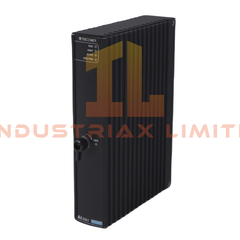
Yokogawa NFAI143-S50 Analog Input Module The Yokogawa NFAI143-S50, also cataloged as the NFAI143 Analog Input Module, operates as a dedicated...
Read more
Available on working days between 9:00 am to 6:00 pm
Email us: sales2@industriaxplc.com
Available 24/7 for inquiries and support
Description
Yokogawa NFAI143-S50 Analog Input Module
The Yokogawa NFAI143-S50, also cataloged as the NFAI143 Analog Input Module, operates as a dedicated hardware component for processing 4-20 mA field signals within STARDOM FCN/FCJ controller platforms. It converts and isolates multiple analog loops to ensure precise data acquisition and uninterrupted electrical signal integrity.
Hardware Specifications
Parameter
Specification
ModelBrand
Yokogawa NFAI143-S50
Origin
Japan
Weight
0.3 kg
Dimensions
32 mm × 130 mm × 107 mm
OperatingTemp
-20 degC to +70 degC
PowerConsumption
230 mA (5 V DC), 540 mA (24 V DC)
InputChannels
16 isolated channels
InputSignalRange
4-20 mA DC
AllowableInputCurrent
24 mA max
Accuracy
±0.1% of full scale
Resolution
16 bits
DataRefreshCycle
10 ms
InputStepResponse
100 ms
TerminalConnection
Pressure Clamp or MIL Connector
Process Control Features
The NFAI143-S50 integrates channel-to-channel isolation, eliminating ground loops and minimizing cross-talk. Automatic cold junction compensation (CJC) is implemented to maintain temperature-independent signal accuracy. Each channel supports HART protocol pass-through, allowing diagnostics and calibration of smart transmitters without interrupting the analog loop. The module also provides 24 V DC loop power for 2-wire or 4-wire field instruments.
Frequently Asked Questions
Q: VnA: Can the NFAI143-S50 be hot-swapped during operation? A: Yes, it supports hot-swap replacement without affecting other modules on the STARDOM backplane.
Q: VnA: What is the channel isolation voltage rating? A: Each input channel is isolated from the backplane and other channels up to 1500 V AC for 1 minute.
Q: VnA: Can this module supply loop power to transmitters? A: Yes, each channel can provide 24 V DC with a current limit of 25 mA.
Field Installation Guidelines
Mount the module on a standard DIN rail with firm mechanical support.
Ensure all field wiring shields are properly grounded at a single point to avoid noise coupling.
Maintain separation between high-current and analog signal wires to prevent interference.
Confirm loop power polarity before energizing the module.
Route analog signal wires away from switching devices and heavy-duty motors to prevent induced voltage spikes.