Available on working days between 9:00 am to 6:00 pm
Email us: sales2@industriaxplc.com
Available 24/7 for inquiries and support
Description
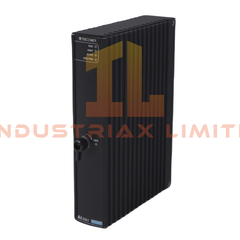
Yokogawa AMM32C RTD Input Multiplexer Module
The Yokogawa AMM32C, also cataloged as the AMM32C RTD Input Multiplexer Module, operates as a dedicated hardware component for RTD signal aggregation and channel multiplexing within Yokogawa DCS analog input subsystems. Configured for multi-channel resistance temperature detection acquisition in field I/O architectures, the Yokogawa AMM32C (AMM32C RTD Input Multiplexer Module) provides direct electrical scanning and signal routing from distributed RTD elements via KS8 connecting cable infrastructure.
Hardware Specifications
Parameter
Specification
ModelBrand
Yokogawa AMM32C
Origin
Japan
Weight
1.8 kg
OperatingTemp
0 to 50 degC
PowerConsumption
Not specified
InsulationResistance
>= 100 MOhm (500 V DC)
WithstandingVoltage
500 V AC
Humidity
5 to 90 % RH
Interface
KS8 connecting cable system
Function
RTD input multiplexing
Yokogawa RTD Signal Multiplexing and DCS Interface Behavior
The AMM32C implements RTD channel scanning architecture designed for resistance-based temperature measurement distribution across multi-point field wiring networks. Within Yokogawa process control environments, RTD inputs are typically routed through multiplexed acquisition paths prior to A/D conversion stages in central I/O processing units.
Channel switching logic is implemented through sequential electrical routing, enabling shared acquisition circuitry across multiple RTD sensors. This reduces parallel analog front-end loading while maintaining deterministic sampling order across input channels.
Frequently Asked Questions
Q: Does the AMM32C support hot-swap operation during RTD loop energization? A: Hot-swap behavior is dependent on system backplane configuration. RTD loops should be de-energized prior to module insertion or removal to prevent transient measurement deviation.
Q: What is the impact of channel multiplexing on RTD measurement update rate? A: Update rate is governed by internal scan sequencing. Each RTD channel is processed sequentially, resulting in time-multiplexed sampling rather than simultaneous acquisition.
Q: Is channel-to-channel electrical isolation implemented within the module? A: Isolation characteristics are defined at system level and depend on associated I/O base architecture. The module itself operates within defined insulation resistance limits.
Field Installation Guidelines
Ensure KS8 connecting cable routing maintains separation from high-voltage power conductors to minimize induced noise coupling into RTD measurement loops. Shield termination should be executed at a single grounding point to avoid ground loop formation.
Module insertion should be performed on de-energized I/O racks. Mechanical seating force must be applied evenly along the module guide rails to avoid connector pin misalignment.
Cable strain relief must be applied externally to prevent mechanical load transfer to terminal interfaces under vibration or thermal cycling conditions.