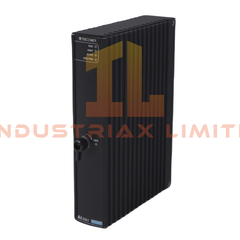
Yokogawa AMM21T Thermocouple Input Multiplexer Module The Yokogawa AMM21T, also cataloged as the AMM21T Thermocouple Input Multiplexer Module, operates as...
Read more
The Yokogawa AMM21T, also cataloged as the AMM21T Thermocouple Input Multiplexer Module, operates as a dedicated hardware component for consolidating multiple thermocouple signals within CENTUM VP and CENTUM CS distributed control systems.
HardwareSpecifications
Parameter
Specification
ModelBrand
Yokogawa AMM21T
Origin
Japan
Weight
Approximately 200 g
Dimensions
95 mm x 115 mm x 40 mm
OperatingTemp
-10 degC to 55 degC
StorageTemp
-20 degC to 70 degC
Humidity
10% to 90% RH non-condensing
PowerConsumption
5 W maximum per module
InputChannels
4 channels analog input
Resolution
16-bit
SamplingRate
10 MS/s per channel
Bandwidth
3 MHz maximum frequency response
InputVoltageRange
60 VDC + AC peak maximum
IsolationVoltage
200 V channel-to-channel
Accuracy
±0.1% of reading typical
NoiseLevel
±4 μV typical
Communication
SMARTDAC+ proprietary bus interface
Mounting
DIN rail or wall mount compatible
Protection
IP20 front panel
Process Control Specifics
Supports cold junction compensation (CJC) for all connected thermocouples to ensure linearized temperature readings.
Channel-to-channel isolation prevents cross-interference between adjacent measurement circuits.
Integrated signal conditioning for low-noise operation at ±4 μV typical.
Compatible with 4-20 mA or system-level digital output conversion.
Frequently Asked Questions
Q: Can the AMM21T support hot-swapping in the I/O nest? A: The module is not designed for hot-swapping; power must be removed before insertion or removal to prevent damage to the backplane or module circuitry.
Q: What is the maximum sampling rate per channel? A: Each analog input channel can sample up to 10 MS/s; simultaneous multi-channel sampling may be limited by the backplane bus bandwidth.
Q: Does the module include built-in thermocouple fault detection? A: Yes, sensor burnout and disconnection are detected, and the affected channel is isolated to prevent propagation to other channels.
Field Installation Guidelines
Install on a DIN rail or secure wall mount; ensure module orientation allows proper airflow.
Maintain shielded cabling grounded at a single point to minimize noise pickup.
Route analog thermocouple signals separately from power or switching circuits to reduce EMI.
Verify backplane connection integrity before system power-up to ensure proper channel addressing.
Avoid mechanical stress on terminal connectors; torque screws to manufacturer-specified limits.