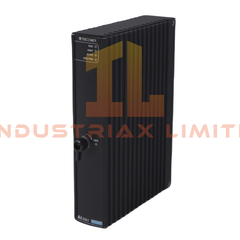
Yokogawa AIP571 Electrical Transceiver RIO I/O Module The Yokogawa AIP571, also cataloged as the AIP571 Electrical Transceiver RIO I/O Module,...
Read more
Available on working days between 9:00 am to 6:00 pm
Email us: sales2@industriaxplc.com
Available 24/7 for inquiries and support
Description
Yokogawa AIP571 Electrical Transceiver RIO I/O Module
The Yokogawa AIP571, also cataloged as the AIP571 Electrical Transceiver RIO I/O Module, operates as a dedicated hardware component for optical fiber based Remote I/O communication linking Field Control Units (FCU) and distributed RIO nodes within Yokogawa ESB bus architectures.
Configured for electrical/optical signal transceiving in Remote I/O expansion networks, the Yokogawa AIP571 (AIP571 Electrical Transceiver RIO I/O Module) provides direct physical/electrical execution of deterministic data exchange between redundant RIO stations over fiber optic links, enabling FCU-level integration.
571: Electrical transceiver module variant for RIO fiber communication extension
No additional suffix options are defined for this single-order hardware identifier
Hardware Specifications
Parameter
Specification
ModelBrand
Yokogawa AIP571
Origin
Japan (Yokogawa Electric Corporation)
Communication Interface
Optical fiber link for RIO / ESB bus extension
System Role
RIO transceiver / FCU communication interface
Redundancy Support
Dual-redundant ESB bus architecture support
DCS Optical Fiber RIO Transceiver Architecture
ESB Bus Optical Link Layer Implementation
The AIP571 functions as a physical layer transceiver for Yokogawa ESB bus based RIO systems. It converts electrical backplane communication signals into optical transmission streams, enabling long-distance deterministic communication between FCU racks and distributed I/O nodes.
Channel integrity is maintained through synchronized optical duplex paths, supporting redundant transmission routing where dual ESB paths operate in parallel. Signal timing alignment is preserved at the transceiver level to maintain RIO scan consistency.
4-20 mA Process Signal Aggregation via RIO Stack
Within Yokogawa distributed control architectures, analog and discrete field signals (including 4-20 mA loops and digital contact inputs) are aggregated in RIO modules and forwarded via the AIP571 optical interface. The module itself does not perform signal conditioning but acts as a deterministic transport gateway to FCU processing layers.
Channel-to-Fiber Isolation Boundary
Electrical isolation is implemented between RIO backplane logic and optical transmission stage. This separation prevents ground loop propagation across remote cabinet installations and ensures stable signal integrity across long-distance fiber routes in multi-rack configurations.
Frequently Asked Questions
Q1: Can the AIP571 be hot-swapped during ESB bus operation? A1: The module is not designed for live replacement under energized ESB bus conditions. System shutdown or controlled rack isolation is required before insertion or removal.
Q2: Does the AIP571 perform signal conversion for analog inputs? A2: No. It operates strictly as a communication transceiver. Analog/digital signal processing is handled by upstream RIO I/O modules.
Q3: What is the maximum supported redundancy mode? A3: It supports dual-redundant ESB bus communication paths, maintaining parallel optical transmission channels for failover synchronization.
Field Installation Guidelines
Install module only in designated Yokogawa RIO rack slots compatible with ESB bus backplane architecture
Ensure optical fiber polarity alignment before connection to prevent link initialization failure
Maintain minimum bend radius for fiber cables to avoid signal attenuation
Verify redundant channel pairing before system commissioning
Ensure backplane connectors are fully seated to prevent intermittent communication faults
Keep installation environment free from excessive dust or conductive contamination affecting optical interfaces