Description
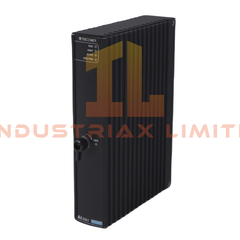
Yokogawa ADV551-P60/D5A00 Digital Output Module
TheYokogawa ADV551-P60/D5A00also cataloged as theADV551Digital Output Module, operates as a dedicated hardware component for discrete signal actuation within Yokogawa distributed control system I/O architecture. The module executes 32-channel 24 V DC isolated digital output switching, supporting pulse width output and time-proportional control functions at field termination level.
Suffix Breakdown & Model Matrix
-
ADV551: Base module designation (Digital Output Module, 32-channel class)
-
P: Pulse width output function / time-proportional output enabled
-
60: Status display enabled, non-explosion protection configuration
-
0: Basic hardware revision type
-
D5A00: KS Cable Interface Adapter support for 32-channel digital termination
Hardware Specifications
| Parameter |
Specification |
| Model |
ADV551-P60/D5A00 |
| Brand |
Yokogawa |
| Origin |
Japan |
| Channels |
32 channels |
| Output Type |
24 V DC digital output |
| Isolation |
Channel-to-channel isolated |
| Functionality |
Pulse width output / time-proportional output |
| Option Interface |
KS Cable Interface Adapter (D5A00) |
| Weight |
0.2 kg |
DCS Output Channel Isolation Architecture (Yokogawa Process I/O Behavior)
The ADV551 module implements channel-level electrical isolation typical of Yokogawa distributed control system I/O design. Each output channel is independently driven to prevent cross-channel backfeed under inductive load switching conditions. In pulse width modulation mode, output timing resolution is governed by internal scan synchronization with the system backplane, enabling deterministic actuation for solenoid valves and discrete actuators in process control loops.
Signal termination through the KS Cable Interface Adapter (D5A00) maintains separation between field wiring and electronics assembly, reducing coupling effects during high-density 32-channel operation.
Frequently Asked Questions
Q1: Can the ADV551 support inductive load switching directly?
A1: Yes, but external suppression (flyback diode or snubber circuit) is required to limit voltage transients generated by inductive field devices.
Q2: Does the module support hot-swap replacement?
A2: Hot-swap capability depends on the system rack configuration. The module itself requires backplane-safe insertion procedures to avoid bus disturbance.
Q3: Are all channels electrically independent?
A3: Yes. Each output channel is isolated to reduce inter-channel leakage and maintain signal integrity under mixed load conditions.
Field Installation Guidelines
-
Ensure power is isolated before inserting or removing the module from the I/O rack.
-
Maintain correct KS Cable Interface Adapter seating (D5A00) to avoid partial contact on high-density terminals.
-
Route field wiring separately from analog or communication cables to minimize electromagnetic coupling.
-
Verify 24 V DC field supply stability under full 32-channel load conditions.
-
Observe correct grounding practices for the system rack to ensure channel isolation integrity is maintained.