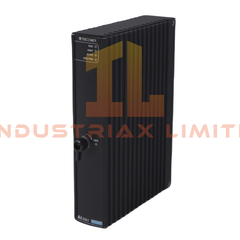
Yokogawa AAR181-S00 RTD Input Module Configured for RTD signal acquisition in CENTUM and related DCS architectures, the Yokogawa AAR181-S00 (AAR181...
Read more
Available on working days between 9:00 am to 6:00 pm
Email us: sales2@industriaxplc.com
Available 24/7 for inquiries and support
Description
Yokogawa AAR181-S00 RTD Input Module
Configured for RTD signal acquisition in CENTUM and related DCS architectures, the Yokogawa AAR181-S00 (AAR181 RTD Input Module) provides direct physical and electrical execution for 16 isolated temperature input channels with resistance-based sensing conversion.
Suffix Breakdown & Model Matrix
Code Segment
Description
AAR181
Analog RTD input module
-S
Standard type
0
Fixed option code
0
Basic type
Hardware Specifications
Parameter
Specification
Model
AAR181-S00
Brand
Yokogawa
Product Type
RTD Input Module
Input Type
RTD analog input
Input Channels
16 isolated channels
Input Range
-200 degC to 800 degC
Accuracy
+/-0.2 degC
Maximum Input Resistance
2 Mohm
Signal Isolation
Channel-to-channel isolated
Supported Protocols
Modbus, PROFIBUS DP
Origin
Japan
Channel Isolation and Process Signal Handling
The module implements channel-to-channel isolation for RTD acquisition circuits to reduce ground loop propagation between independent temperature sensing points. Isolation boundaries are maintained between field input sections and internal processing circuitry during resistance-to-temperature conversion.
The AAR181-S00 supports integration with distributed process control communication layers through Modbus and PROFIBUS DP interfacing paths. RTD signal processing is executed per isolated channel, allowing simultaneous monitoring of multiple resistance temperature detectors without shared analog return dependency.
Frequently Asked Questions
Q: Does the AAR181-S00 support direct RTD wiring without external signal converters? A: Yes. The module is designed for direct RTD input acquisition and internal temperature conversion processing.
Q: Are all 16 RTD channels electrically isolated from each other? A: Yes. The provided specifications identify the module as a 16-channel isolated RTD input module with channel isolation architecture.
Q: What installation practice is recommended for RTD signal cable routing? A: RTD input cables should be separated from high-voltage and variable-frequency drive wiring. Shield grounding should be terminated according to the control cabinet grounding scheme to minimize induced noise on low-level resistance signals.
Field Installation Guidelines
Install the module only after confirming backplane slot compatibility with the target Yokogawa control rack.
Use twisted-pair shielded RTD extension cable for field sensor termination.
Avoid parallel routing with motor feeder cables, relay coils, or switching power conductors.
Verify terminal torque according to cabinet assembly procedures before energization.
Confirm RTD element type consistency across all configured channels before system commissioning.
Maintain clean cabinet airflow conditions to prevent localized thermal accumulation around densely populated I/O sections.