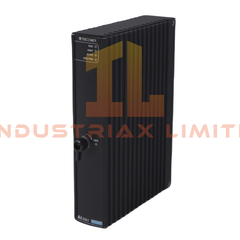
Bently Nevada 46920-01 High-Performance Vibration Transducer Interface The Bently Nevada 46920-01, also cataloged as the 46920 vibration interface module, operates...
Read more
The Bently Nevada 46920-01, also cataloged as the 46920 vibration interface module, operates as a dedicated hardware component for dynamic vibration signal conditioning and transmission within Bently Nevada 3500 Series machinery protection systems.
Hardware Specifications
Parameter
Specification
Model
46920-01
Brand
Bently Nevada
Origin
USA
Weight
0.45 kg
Dimensions
120 mm x 60 mm x 35 mm
Operating Temp
-40 deg C to +100 deg C
Power Consumption
1.2 W @ 24 VDC
Supply Voltage
10 to 30 VDC
Response Time
~10 us
Accuracy
±0.5 % of full scale
Enclosure Rating
IP67
Circuit Protection
Short-circuit and reverse-polarity protection
Eddy-Current Probe Scaling and Gap Voltage Validation
The 46920-01 supports eddy-current probe scaling for direct integration with Bently Nevada proximity probes. Gap voltage validation aligns to -10 VDC target levels, ensuring correct probe standoff and linear measurement range. Cross-talk suppression circuitry minimizes interference between adjacent transducer channels, maintaining signal fidelity in rotor dynamics monitoring applications.
Frequently Asked Questions
Q: Does the 46920-01 support hot-swap installation in live 3500 racks?
A: No. Power must be removed from the rack before installing or removing the module to avoid damage to backplane contacts and internal circuitry.
Q: What is the recommended cable shielding practice for this interface?
A: Shielded twisted-pair cables should be used, with the shield grounded at one end only—preferably at the 3500 rack ground bus—to prevent ground loops.
Q: Is firmware upgrade possible in the field?
A: Firmware is factory-set; no field upgrade procedure is supported for this model.
Field Installation Guidelines
Mount the module in a vibration-isolated section of the 3500 rack. Ensure all connector retention screws are torqued to specification. Maintain separation between signal wiring and high-power cables to reduce electromagnetic coupling. Verify gap voltage prior to energizing the system to confirm proper probe positioning.