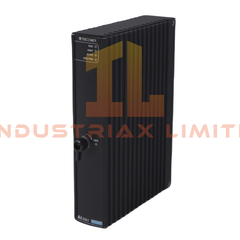
Bently Nevada 16699-01-02-02 Seismoprobe Velocity Transducer The Bently Nevada 16699-01-02-02, also cataloged as the 16699 Seismoprobe Velocity Transducer, operates as...
Read more
The Bently Nevada 16699-01-02-02, also cataloged as the 16699 Seismoprobe Velocity Transducer, operates as a dedicated hardware component for converting absolute casing and bearing housing vibration into proportional voltage signals within machinery protection and condition monitoring networks.
Suffix Breakdown & Model Matrix
Code
Option Type
Meaning / Configuration
16699
Product Series
Seismoprobe Velocity Transducer
-01
Sensitivity Option
500 mV/in/sec (19.7 mV/mm/sec) standard sensitivity
-02
Mounting Option
Stud-mount version (1/4-28 UNF)
-02
Connector Option
Standard MIL-C-5015 2-pin top-exit connector
Hardware Specifications
Parameter
Specification
Model
16699-01-02-02
Brand
Bently Nevada
Origin
USA
Weight
250 g (0.55 lbs)
Dimensions
63.5 mm diameter x 101.6 mm length (approx.)
Operating Temp
-29 deg C to 100 deg C (-20 deg F to 212 deg F)
Power Consumption
Passive (Self-generating, no external power required)
Sensor Type
Moving-Coil Velocity Transducer
Sensitivity
500 mV/in/sec (19.7 mV/mm/sec) +/- 5 %
Frequency Range
270 to 60,000 CPM (4.5 Hz to 1,000 Hz)
Resonant Frequency
> 4.5 kHz
Output Impedance
350 Ohm nominal
Transverse Sensitivity
<= 5 % of axial sensitivity
Housing Material
Industrial-grade Stainless Steel
Mounting Method
1/4-28 UNF threaded stud mount
Rotor Dynamics and Signal Integrity
The 16699 series transducers are optimized for rotor dynamics analysis by maintaining linear output characteristics within the defined frequency band. The moving-coil design minimizes eddy-current interference and supports cross-talk suppression when multiple units are installed in close proximity. Gap voltage validation is not applicable due to the passive nature of the device; however, baseline bias checks against known vibration sources are recommended to confirm coil integrity prior to integration into 3500 series monitoring racks.
Frequently Asked Questions
Q: Does the 16699-01-02-02 support hot-swap replacement in live machinery protection systems?
A: No. Although the sensor is passive, removal or installation under vibration conditions can induce transient voltages that may affect monitoring system thresholds. Perform replacement during scheduled outages.
Q: What is the minimum bending radius for the interconnecting cable to avoid signal attenuation?
A: Maintain a cable bend radius of at least 50 mm to prevent mechanical stress on the MIL-C-5015 connector and internal conductor displacement.
Q: Is calibration required after replacing the transducer?
A: Yes. Recalibrate the monitoring system channel using a known vibration reference source to ensure measurement accuracy within the stated +/- 5 % sensitivity tolerance.
Field Installation Guidelines
Install the transducer using the 1/4-28 UNF stud with a torque specification of 3.4 Nm (30 in-lb). Ensure the mounting surface is clean and flat to maintain full thread engagement. Orient the unit vertically or at the specified angle (90 deg +/- 2.5 deg) relative to the vibration axis. Use proper shielded cable practices and ground the shield at one point only, preferably at the monitoring system end, to prevent ground loops. Avoid routing signal cables in parallel with high-voltage power lines to reduce electromagnetic interference.